8 Best French Series to Learn French: A1 to C1 Guide
If you love stories and want practical, everyday French, this guide is for you. Using carefully chosen French series to learn French blends entertainment with serious progress: you get real accents, natural phrases, humor, and cultural clues that textbooks cannot capture. Below, you will find a curated list of 8 French shows, organized by CEFR level from A1 to C1, along with study strategies that transform screen time into real learning. You will also see where to stream each title legally, how to use subtitles well, and what to focus on in your French lessons or French course so that your viewing turns into speaking power. PrepFrench Classes uses authentic media inside our French classes, so consider this article your roadmap to watch smarter, not just more.
Expect a practical plan: what to watch at your level, how to structure episodes into manageable study sessions, and how to build vocabulary you will actually use. Whether you prefer comedies, thrillers, or slice‑of‑life stories, there is a show here that fits your goal to learn French. If you want a more guided path while you watch, you can always explore our online French classes or book a free demo to get a plan that matches your time and level.
Free First Step
Take the guesswork out of learning French.
Not sure where to begin, which course fits your goal, or how long it will take? Book a free demo class with PrepFrench Classes and get a personalized plan built around your level, schedule, and goals.
Why French Series Are Effective for Learning
Authentic shows offer context-rich language input that mirrors real life. Viewers see situations play out, which makes unknown words guessable from visuals, intonation, and reactions. That is powerful for French language acquisition, especially when paired with short, regular study sessions.
The Role of Context in Language Learning
Words stick when they arrive inside stories. Context tells you whether a line is polite or teasing, formal or sarcastic. Visuals clarify slang and idioms that are otherwise confusing on the page. For example, hearing tu me fais marcher in a playful scene makes it clear that the phrase means you are joking with me rather than literally walking someone.
- Context reduces dictionary lookups, which keeps your brain in French longer.
- Visual cues help you decode fast speech and connected sounds.
- Repeated settings, like an office or family home, recycle useful vocabulary naturally.
Incidental Learning Through Watching
Research in second language acquisition shows that incidental learning, which is learning while focused on meaning rather than form, boosts vocabulary and structures over time. Subtitles can support this. Studies suggest that same-language subtitles increase word recognition and listening accuracy, while first-language subtitles help with plot comprehension. Used strategically, both types can serve you at different stages of a French course.
- First pass with English subtitles: understand the story and characters.
- Second pass with French subtitles: notice spelling, grammar, and linking.
- Short replays without subtitles: test what you can catch unaided.
Building Vocabulary with French Series
Repetition is built into series. Characters return, storylines continue, and catchphrases resurface. This repetition supports vocabulary retention without flashcards only, although flashcards can be a helpful add-on. PrepFrench integrates clips into French lessons, then turns key lines into speaking drills so you reuse new words in meaningful ways.
- Create a micro-glossary per episode, 8 to 12 items only.
- Record one or two lines that you want to mimic, then shadow them for pronunciation.
- Recycle words in your next conversation practice or in writing prompts.
If you want help building a personal watch-and-speak plan, reach us via the PrepFrench contact page. We can align media, grammar, and speaking tasks for your level.
How to Choose a French Series by Level
The CEFR scale (A1 to C1) is a reliable map for French language learners. It tells you what listening tasks you can handle and which shows will stretch you just enough without causing frustration. Choosing the right difficulty is the fastest route to steady progress, whether you learn French alone or inside structured French courses.
Understanding CEFR Levels (A1 to C1)
- A1: Can catch isolated words and familiar phrases when speech is slow and clear. Ideal content: kids’ shows, learner series, highly visual plots.
- A2: Understands simple, routine information. Can follow short scenes with everyday vocabulary and predictable contexts.
- B1: Grasps main points of clear standard speech on work, school, or leisure. Best with contemporary dialogue and familiar situations.
- B2: Understands extended speech, including most TV news, films, and series with some idioms and regional accents.
- C1: Follows long, complex speech with implicit meaning. Ready for fast dialogue, cultural references, and specialized vocabulary.
Matching Your Level with Series
Pick shows where you understand 70 to 85 percent of what you hear with support from subtitles. That sweet spot builds confidence and new learning at the same time. If you understand less than half, switch to an easier show or use more scaffolding, such as French subtitles and short scene replays.
- Beginners (A1-A2): Choose clear pronunciation, short episodes, and plots with strong visuals. Use first-language subtitles first, then French.
- Intermediate (B1-B2): Contemporary comedies and dramas. Use French subtitles from the start, then replay scenes without subtitles.
- Advanced (C1): Dense narratives with slang, idioms, or professional settings. Alternate subtitles off and on to train raw listening.
If your goal includes an exam like TEF or TCF, series can supplement structured prep. For a targeted path, see our Full TCF Canada Course or Full TEF Canada Course.
8 Must-Watch French Series to Learn French by Level
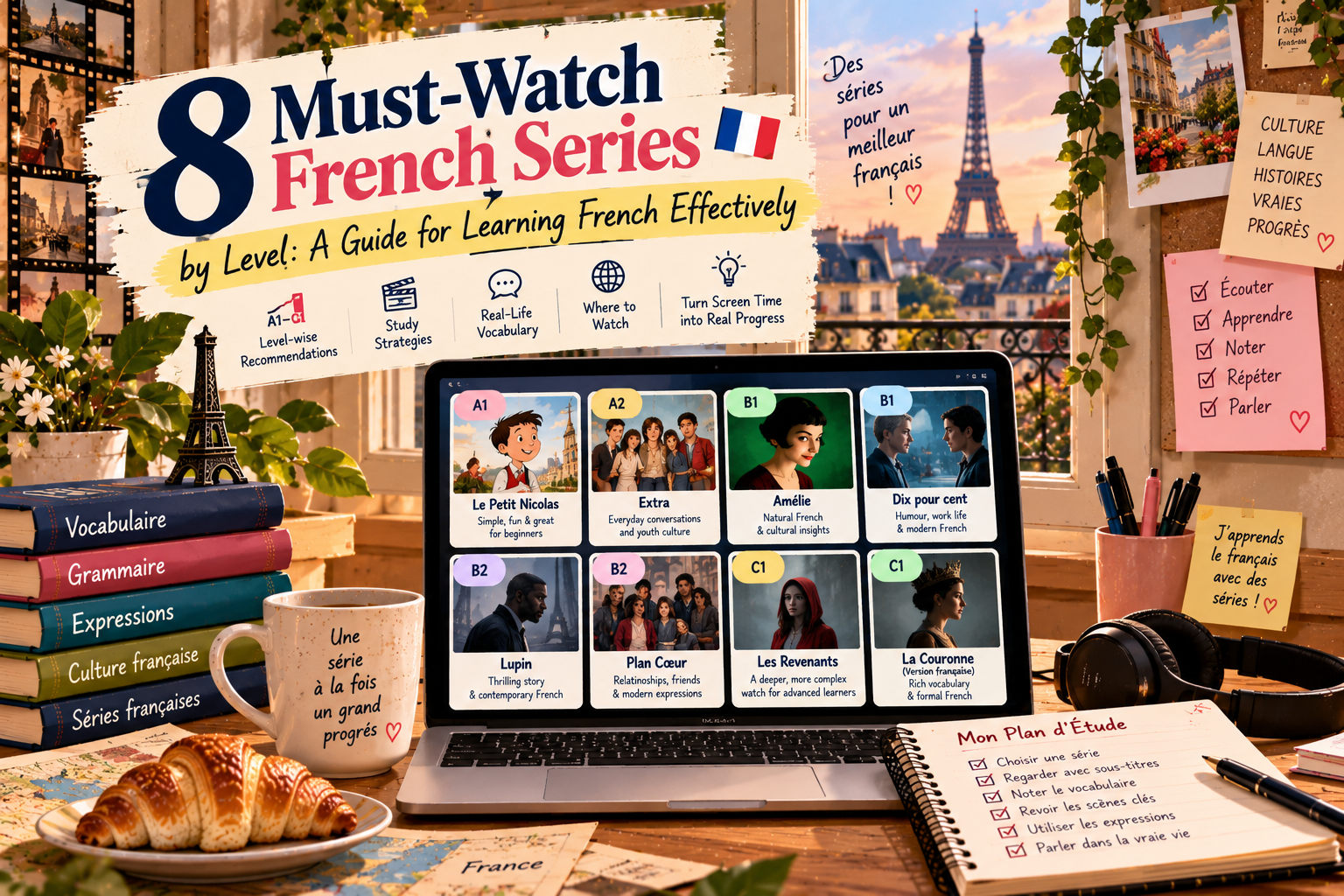
Below are eight of the best French TV shows for learners. Each entry includes a quick synopsis, suggested CEFR level, why it helps, subtitle guidance, and where to watch. Availability can vary by country, so check your local catalog.
1) Extra French (A1 to A2)
Genre: Sitcom-style learner series. Synopsis: Two roommates in Paris navigate daily life and misunderstandings with a new friend who speaks limited French. The scripts are written for learners and recycle everyday structures.
Why it helps: Slow, clear delivery and repetitive, survival French. Ideal for absolute beginners building confidence with greetings, shopping, directions, and simple tenses.
- Subtitles: Start with French subtitles. Switch to no subtitles for very short sections and shadow a line or two.
- Where to watch: Often available free on educational channels and YouTube. Search “Extra French episode 1”.
2) Trotro or other preschool shows (A1)
Genre: Kids’ animation. Synopsis: Short, simple stories with clear narration and visual storytelling. Episodes are typically 3 to 5 minutes.
Why it helps: Highly comprehensible speech, present tense, and concrete vocabulary. Perfect for building a base before adult shows.
- Subtitles: Use French subtitles if available. Repeat entire episodes due to short length.
- Where to watch: France.tv for some titles in France, official YouTube channels in many regions.
3) Dix pour cent (Call My Agent!) (B1)
Genre: Workplace comedy-drama. Synopsis: Parisian talent agents juggle actor egos, crises, and their own chaotic lives. Cameos from real French stars keep episodes lively.
Why it helps: Everyday office French, lots of negotiation language, and realistic speech that is quick but clear. Characters repeat themes across episodes, which reinforces vocabulary.
- Subtitles: French subtitles strongly recommended at first. Rewatch key scenes without subtitles to test comprehension.
- Where to watch: Netflix in many regions.
4) Plan Coeur (The Hook Up Plan) (B1)
Genre: Romantic comedy. Synopsis: A group of friends in Paris attempt to fix a breakup with a plan that spins out of control. Slang and humor are central, but plots remain straightforward.
Why it helps: Modern spoken French, friendship vocabulary, dating talk, and very high rewatch value. Short scenes are great for line-by-line practice.
- Subtitles: Begin with French subtitles, pause for recurring slang like bof, ça marche, vas-y, and record them in your episode glossary.
- Where to watch: Netflix in many regions.
5) Lupin (B1 to B2)
Genre: Heist thriller. Synopsis: Assane Diop, inspired by Arsène Lupin, pulls off elegant plots while confronting personal history. Fast-paced but with clear storytelling and recurring motifs.
Why it helps: Mix of everyday and action vocabulary, high-quality sound, and strong visual cues. Accents are accessible for intermediate learners.
- Subtitles: French subtitles first. Try watching one scene without subtitles, then repeat with subtitles to check gaps.
- Where to watch: Netflix globally in most regions.
6) HPI - Haut Potentiel Intellectuel (B2)
Genre: Crime comedy-drama. Synopsis: A brilliant, quirky single mother with a genius IQ helps police solve complex cases. Rapid banter meets procedural plots.
Why it helps: Exposure to humor, idioms, and slightly faster speech. Good training for listening agility, with plenty of visual support from case details.
- Subtitles: Use French subtitles initially. Switch them off for dialogue-driven scenes after one pass.
- Where to watch: Disney+ or Hulu in some regions, TF1/streaming partners in France. Availability varies.
7) Le Bureau des Légendes (C1)
Genre: Espionage drama. Synopsis: French intelligence officers run risky operations while navigating politics and identity. Dialogue is dense with subtext.
Why it helps: A masterclass in advanced listening: subdued tones, implicit meaning, and professional vocabulary. Ideal for learners pushing toward near-native comprehension.
- Subtitles: Alternate between French subtitles and none. Practice summarizing scenes aloud after viewing.
- Where to watch: Canal+ in France, Sundance Now or other partners in select regions.
8) Les Revenants (The Returned) (B2 to C1)
Genre: Supernatural drama. Synopsis: In a mountain town, people return years after their deaths with no memory of what happened. Slow-burn mystery with nuanced, natural dialogue.
Why it helps: Slower pace allows close listening, while subtle emotional exchanges challenge inference skills. Great for training tone and nuance.
- Subtitles: French subtitles recommended. Replay key emotional scenes without subtitles to focus on intonation.
- Where to watch: Availability varies by country across platforms like Canal+, Prime Video, or other regional partners.
Structured French Courses
Stop learning French the slow way.
Apps and random videos keep you stuck at beginner level forever. PrepFrench Classes gives you a structured path, a real teacher, and speaking practice that moves you forward at every lesson.
Available for: beginners · TEF/TCF exam prep · Canadian PR · work and daily French
Tips for Maximizing Learning Through Watching
Watching alone is enjoyable. Watching with a plan is transformative. Use the strategies below to turn every episode into measurable progress. At PrepFrench, we use similar routines inside our online French classes, then bring your new words into real conversations.
Subtitle Strategies
- Two-pass method: First pass with English subtitles for plot, second pass with French subtitles for language. Then try a short scene with no subtitles.
- Pause purposefully: Do not pause every line. Choose 2 to 4 key moments per episode to analyze closely.
- Highlight chunks: Capture short phrases like ça te dit, j’en ai marre, t’inquiète and practice them as units, not word by word.
Building a Study Routine
- Frequency beats intensity: Aim for 20 to 30 minutes, 4 to 5 times per week. Short daily exposure trains your ear faster than one long weekend binge.
- Segment your episode: Work in 5 to 8 minute chunks. Watch once for meaning, again for language, then a final time to shadow a line or two.
- Weekly focus: Pick one theme per week, like greetings, disagreement, apologies, or planning. Log all examples you hear.
Utilizing Vocabulary Extraction Techniques
- Micro-glossary: Limit yourself to 8 to 12 items per episode. Write the French, an example sentence from the show, and a quick translation.
- Shadowing: Record yourself repeating 1 to 3 lines. Focus on rhythm and liaison, like tu as becomes t’as in fast speech.
- Dictation sprints: Choose one 20 second clip. Try to write what you hear, then check with subtitles. Powerful for grammar and listening precision.
- Speak it: Use your new words in a 60 second voice note. If you study with a French tutor or inside PrepFrench Classes, bring the clip and voice note to your next lesson for targeted feedback.
Where to Watch French Series Legally
Legal streaming supports creators and gives you better subtitles and audio. Many platforms now carry strong catalogs of French shows. Availability differs by country, so search within your region and consider free trials responsibly.
Top Streaming Platforms
- Netflix: Extensive lineup including Lupin, Dix pour cent, Plan Coeur, and many films. Strong subtitle options and playback controls.
- Disney+ and Hulu: Carry popular series like HPI in select regions. Good for mainstream, recent shows.
- Prime Video: Rotating selection of French dramas and films. Check regional catalogs for series like Les Revenants.
- Canal+: The go-to in France for premium originals like Le Bureau des Légendes.
- TV5MONDEplus: Free global platform with French shows, documentaries, and news, often with subtitles.
- ARTE: High-quality European content with cultural depth. Availability varies, often accessible in Europe with French and other subtitle options.
- France.tv: Free platform in France for current French TV, kids’ content, and specials. Region restrictions may apply.
Dealing with Geo-Restrictions
Licenses vary by region. Always choose legal options, and check alternative local providers that may host the same titles. Public libraries sometimes offer film platforms with French content. If a show is not available where you live, search the title plus your country to find official partners. PrepFrench encourages legal sourcing in our French language classes, and we will help you pick accessible titles based on your region.
Frequently Asked Questions
Which French series are best for absolute beginners (A1–A2)?
Start simple and visual. Extra French is a classic learner series designed for beginners, with slow speech and recycled phrases. Preschool shows like Trotro or similar short animations also work well, since episodes are only a few minutes and use clear narration. Pair these with French subtitles to link sound and spelling, then replay short scenes without subtitles. If you want guidance on what to watch each week, a structured French course inside PrepFrench Classes can build a personalized watch-and-speak routine.
Should I start with English subtitles or jump to French subtitles?
Use both strategically. For brand-new content, begin with English subtitles to understand the plot. On the second pass, switch to French subtitles to connect sound, spelling, and grammar. Then replay a short scene with no subtitles to test your ear. Over time, try starting episodes directly with French subtitles. The goal is phased support that you gradually remove, not forcing no subtitles before you are ready. This approach works well in online French classes where you can review tricky lines with a French teacher.
How many episodes per week should I watch to see real improvement?
Consistency matters more than volume. Aim for 20 to 30 minutes per session, 4 to 5 days a week. That might be one full episode or two short study segments of a longer episode. Do a two-pass routine, build a micro-glossary of 8 to 12 items, and record a 60 second summary in French. If you pair this with weekly speaking practice inside a French class, most learners notice real listening gains within 4 to 6 weeks. PrepFrench can map a weekly plan to your schedule during a free demo session.
Which series have clearer accents and slower speech for beginners?
Extra French and preschool shows like Trotro are the clearest. For early intermediate learners, Dix pour cent is relatively accessible, with standard accents and high-quality audio. Plan Coeur has modern slang but predictable scenarios that help you follow. When in doubt, choose shorter episodes and strong visual stories. Use French subtitles, hit pause only on 2 to 4 key lines, and repeat those lines out loud to train pronunciation and rhythm. Your French tutor can also suggest shows that match your accent goals.
Where can I legally stream French series in my region?
Start with Netflix, Prime Video, Disney+, Hulu, and Canal+ for major series, then add TV5MONDEplus and ARTE for cultural content. France.tv offers free shows in France. Availability changes by region, so search each platform’s catalog and check official distribution partners in your country. Many platforms offer trials you can use to sample French series. If you need help choosing accessible titles for your location, contact PrepFrench and we will suggest options to support your learning plan and French lessons.
PrepFrench Classes
Ready to start French with a clear plan?
Book a FREE demo class and get a personalized roadmap for your level, goal, and timeline. No pressure, no obligation.
Explore courses:
All French Courses · Full TCF Canada Course · Full TEF Canada Course
Final Thoughts
Picking the right French series is not just about taste, it is about matching level, subtitles, and routine. If you are A1 or A2, start with Extra French or short kids’ shows so your ear locks onto clear, slow speech. At B1, try comedies like Dix pour cent or Plan Coeur that recycle everyday language, then test yourself on slightly faster Lupin. At B2 to C1, push into complex dialogue with HPI, Les Revenants, or Le Bureau des Légendes. The result: week by week, your listening turns active, your vocabulary grows, and your pronunciation becomes natural.
Combine viewing with a simple system, such as the two-pass subtitle method, a micro-glossary per episode, and short shadowing drills. This blend of fun and focus leads to steady improvement. If you want a structured path that connects what you watch to real speaking practice, join our French courses. PrepFrench Classes can build a personalized watch plan, integrate clips into your French lessons, and coach you to speak with confidence.
✅ Next Step: Book a free demo class with PrepFrench Classes and start learning French the right way.
Thank you for reading. If this guide helped, share it with a friend who wants to learn French through great TV. Your next favorite series might also be your most effective study partner.
Written by
Platform Administrator
Practical ideas from the Prep French team for learners building confidence, preparing for exams, and planning their next step in Canada.
Join the discussion
Leave a thoughtful comment.
Your email address will not be published. Comments are reviewed before appearing.