French Social Customs: Etiquette, Culture & Communication

If you want to speak French clearly and confidently, mastering French social customs is not optional, it is essential. The right greeting, the correct level of formality, or a well-chosen closing line can transform a simple exchange into a successful interaction. This matters in daily life and in exams: DELF and DALF assess how appropriately you use language in real contexts. In this guide, you will learn the pillars of French etiquette and lifestyle, from bonjour basics and tu vs vous to dining, email, and business norms. You will also see how PrepFrench Classes weave this sociocultural fluency into our French courses to help you perform better in real life and during exam tasks.
We will cover French greetings etiquette, French dining etiquette, politeness phrases, email and business norms, and what to expect in everyday services. Then we will connect these cultural skills to DELF/DALF expectations, so you can apply them strategically in speaking and writing tasks. If you are exploring structured learning, our French courses and PrepFrench approach emphasize cultural immersion as part of language mastery.
Free First Step
Take the guesswork out of learning French.
Not sure where to begin, which course fits your goal, or how long it will take? Book a free demo class with PrepFrench Classes and get a personalized plan built around your level, schedule, and goals.
Why Understanding French Social Customs and Culture Matters
The Importance of Sociolinguistic Competence
Language is more than grammar. The Common European Framework of Reference (CEFR) highlights sociolinguistic competence as a core skill: choosing the right register, showing respect, and adapting your tone to the situation. In France, a quick bonjour, a polite excuse me, or a formal closing line signals that you understand local expectations. Without these cues, even perfect grammar can feel out of place.
For DELF and DALF, this matters directly. Speaking tasks often simulate real-life exchanges, like making a complaint politely or proposing an idea in a meeting. Writing tasks expect appropriate salutations, closings, and a consistent register. France Éducation International emphasizes that appropriateness influences scores: assessors listen for how you greet, how you mitigate requests, and whether your formal or informal tone fits the setting. PrepFrench Classes integrate these features into every French lesson so that cultural awareness grows together with vocabulary, grammar, and pronunciation.
Examining the CEFR Guidelines
At B1 and B2 levels, the CEFR expects learners to manage social interactions, handle misunderstandings, and maintain relationships. That includes using markers of politeness, choosing tu vs vous tactfully, and organizing discourse with softening phrases. For DELF/DALF, that might look like:
- A2 role play: greeting a shop assistant, asking politely for an item, and thanking them.
- B1 speaking: negotiating plans with a colleague using vous, then switching to tu only when invited.
- B2 writing: an email to a municipality that balances firm complaint with polite tone and formulas.
These are not add-ons. They are part of your score. That is why our online French classes include targeted practice on social formulas and cultural expectations alongside language structures. You learn how French is lived, not just how it is conjugated.
Greetings and Introductions in France
The Art of Saying Bonjour
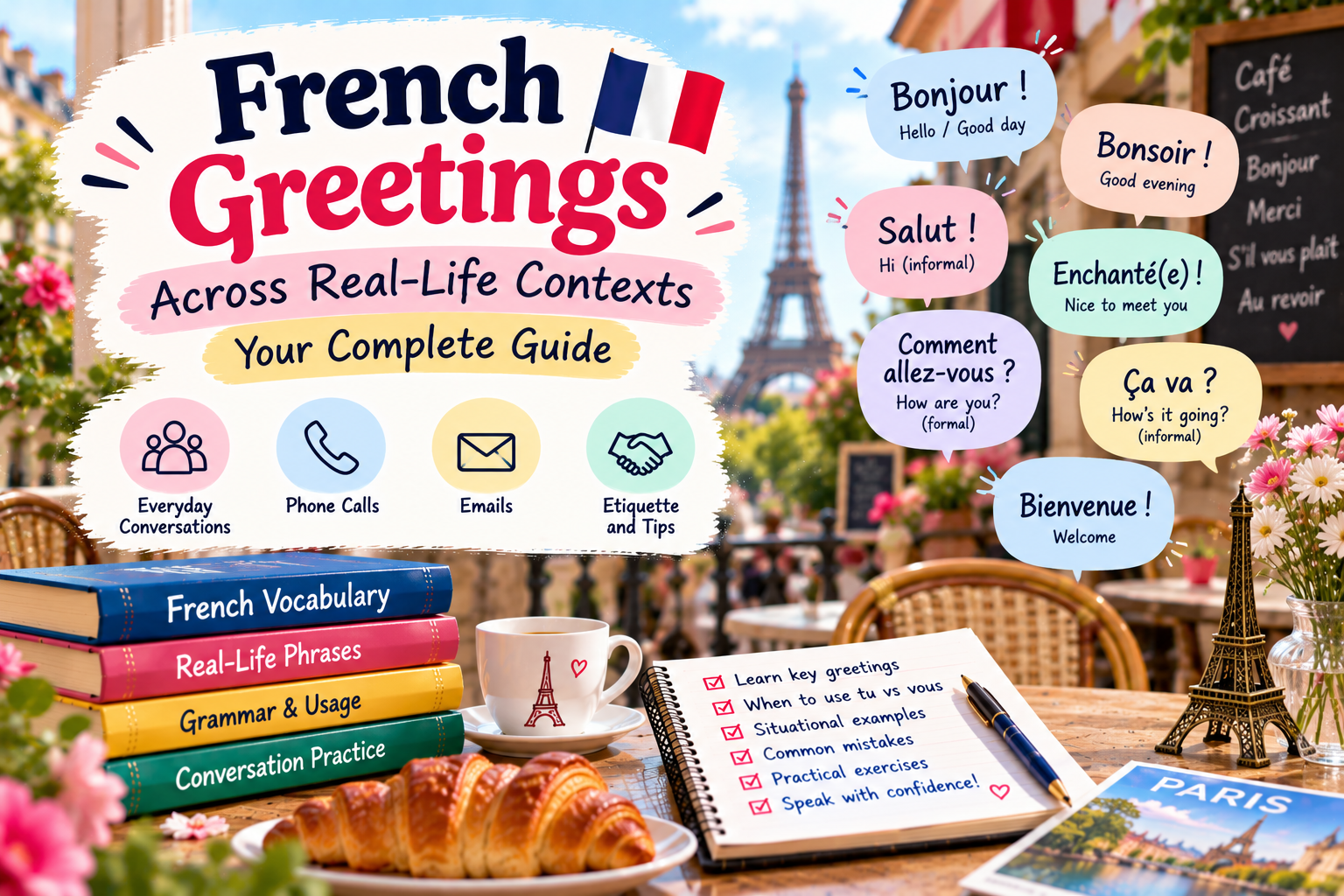
French greetings etiquette is a cornerstone of social life. Always greet before asking for anything, even in shops. Bonjour is expected during the day, bonsoir in the evening, and au revoir when you leave. Without a greeting, service interactions may feel awkward or cold.
- Basic greetings: Bonjour. Bonsoir. Salut (informal).
- Polite extensions: Bonjour Madame. Bonjour Monsieur. Bonjour Mademoiselle (used less often today, Madame is common for adults).
- Follow-ups: Comment allez-vous ? Comment ça va ? Ça va ? Enchanté(e).
In PrepFrench role-plays, you practice approaching a counter, a café server, or a receptionist with the right formula and tone. It is a small change with a large impact on how people respond to you.
Understanding La Bise and Handshakes
La bise, the cheek kiss, is common in personal contexts, but it is less frequent with strangers or in professional situations. A light handshake is standard in formal settings, meetings, and introductions. When unsure, wait for the other person to initiate.
- Professional setting: Handshake, maintain vous until invited to switch.
- Friends and family: La bise or hugs, often region-dependent and relationship-based.
- Schools and internships: Handshakes are common on first meetings, then norms vary by group culture.
For DELF speaking tasks that simulate meeting someone new, a simple Bonjour, je m’appelle…, followed by Enchanté(e) and a handshake gesture sets the right tone and demonstrates cultural awareness.
Choosing Tu or Vous
Tu vs vous is one of the first sociolinguistic choices you will make. Vous communicates respect or social distance, often used with unknown adults, elders, and in service or work contexts. Tu signals familiarity or equal footing among peers. Switching too soon to tu can feel abrupt, while insisting on vous with a close friend can feel distant.
| Context | Default Choice | Notes |
|---|---|---|
| Shops, restaurants, public services | Vous | Start with vous, use polite titles and greetings. |
| Workplace with new colleagues or superiors | Vous | Switch to tu only if invited. |
| Classmates, friends, peers of similar age | Tu | Common in informal settings, use first names. |
| Older adults you do not know well | Vous | You may be invited to use tu later. |
| Online communities or social media | Often tu | Depends on platform culture and topic. |
If in doubt, start with vous. You can say: On peut se tutoyer ? to check if tu is acceptable. PrepFrench teachers include this decision-making in our speaking drills so you gain reflexes that fit French lifestyle and expectations.
Politeness & Email Etiquette
Crafting Formal Emails
French email etiquette values clear structure, a respectful tone, and conventional formulas. The subject line should be precise, the greeting should match formality, and closings must include a polite sign-off and your contact details. Keep paragraphs short and end with a clear request or next step. For DELF B1 or B2 writing, a well-organized, polite message scores higher than a long but unstructured one.
Polite Openings and Closings
- Greetings: Madame, Monsieur, Bonjour Madame Dupont, Bonjour Monsieur Martin, Chère Madame…, Cher Monsieur…
- Reason for writing: Je me permets de vous contacter au sujet de…, Suite à votre message…, J’aimerais obtenir des informations concernant…
- Softeners: Serait-il possible de… ? Pourriez-vous me confirmer… ? Je vous remercie par avance de…
- Closings: Cordialement, Bien cordialement, Sincères salutations, Respectueusement (very formal)
- Signature block: Full name, role or program, phone number if needed
Indirect Requests in French
French politeness often uses indirect requests and softeners. Instead of Donnez-moi…, prefer Pourriez-vous m’envoyer… or Serait-il possible d’avoir… This style is part of sociolinguistic competence and is expected in exams and real workplaces.
- Pourriez-vous me transmettre le document d’ici demain, s’il vous plaît ?
- Serait-il possible de fixer un rendez-vous la semaine prochaine ?
- Je vous serais reconnaissant(e) de bien vouloir confirmer la réception.
We teach these formulas in context during our professional French lessons. If you want focused practice, reach out through our Contact page to ask about email and business writing modules in our French classes.
Structured French Courses
Stop learning French the slow way.
Apps and random videos keep you stuck at beginner level forever. PrepFrench Classes gives you a structured path, a real teacher, and speaking practice that moves you forward at every lesson.
Available for: beginners · TEF/TCF exam prep · Canadian PR · work and daily French
Dining and Invitation Customs
What to Bring When Invited
French dining etiquette begins at the door. If you are invited to someone’s home, arrive with a small gift. Flowers, quality chocolates, or a good pastry box work well. If you bring wine, ask your host whether they prefer to save it for another occasion. This shows respect for the menu they planned.
- Safe gifts: Chocolates, artisanal jam, flowers (avoid chrysanthemums at times, they are linked to cemeteries in some regions).
- Timing: A polite text in advance if you are running late. Aim to be a few minutes late for dinners, not early.
- Offer help: Puis-je vous aider ? Besoin d’un coup de main ? The offer is appreciated even if declined.
French Table Manners: Dos and Don'ts
Table manners in France value calm conversation, appreciation of food, and neatness. Keep hands visible above the table, wrists resting lightly at the edge. Bread goes directly on the tablecloth or on a side plate, break pieces by hand, and avoid large bites. Wait for a toast or a bon appétit before starting, although French people may begin when everyone is served.
- Do: Say Merci, c’est délicieux and compliment specific dishes sincerely.
- Do: Pass items with please and thank you, s’il vous plaît, merci.
- Don’t: Cut salad leaves with a knife. Fold them with your fork.
- Don’t: Place elbows on the table for long, rest forearms lightly instead.
- Don’t: Pour wine for yourself first, offer others before refilling your glass.
In PrepFrench classes, we simulate a dinner invitation with conversation starters, refusals of second helpings politely, and small talk that fits French culture daily life, so you can apply it at real tables and in oral exam tasks that reference social events.
Timing and Social Norms for Invitations
Reply to invitations promptly and clearly. If you cannot attend, propose another time or send a thank-you after the event. If you stay late, check whether your host intends to wrap up. Offer to help clean up or at least bring dishes to the sink. After a lovely meal, a short thank-you message the next day is a thoughtful touch: Merci encore pour le dîner d’hier soir, c’était vraiment agréable.
Navigating Everyday Services
Politeness in Shops: What to Expect
Politeness strategies in shops and markets are simple but crucial. Start with Bonjour, then your request. Wait your turn, and avoid calling across the space. Many small shops value short, respectful exchanges. A sincere Merci, bonne journée at the end is the norm.
- Bonjour Madame, je voudrais une baguette tradition, s’il vous plaît.
- Excusez-moi, est-ce que vous avez cette chemise en taille M ?
- Merci beaucoup. Bonne journée, au revoir.
Interactions at the Pharmacy or Office
At the pharmacy, you may need to explain symptoms briefly and clearly. In government offices, prepare documents in advance, use vous, and be patient with procedures. If something is unclear, use indirect questions: Serait-il possible de m’expliquer la prochaine étape ?
- Pharmacy: Bonjour, j’ai mal à la gorge depuis trois jours. Auriez-vous quelque chose à me recommander ?
- Office: Bonjour, je viens pour finaliser mon dossier. Pourriez-vous vérifier si tout est complet, s’il vous plaît ?
- Clarifying: Je ne suis pas sûr d’avoir bien compris. Pourriez-vous répéter, s’il vous plaît ?
We model these conversations in class so you build ready-to-use scripts and the confidence to adapt them. If you want systematic practice for daily life, explore our French course options that focus on real interactions.
Work and Study Culture in France
Meeting Etiquette: Key Practices
French business etiquette values punctuality, a clear agenda, and structured turn-taking. Greet everyone with a simple Bonjour and a light handshake at first meetings. Use titles and last names until invited to switch. During discussions, avoid interrupting repeatedly, and summarize before disagreeing: Si je comprends bien, vous proposez…, cependant… This tone carries well in DELF/DALF oral tasks that simulate professional exchanges.
- Keep emails short, with precise subject lines and polite closings.
- Use vous by default with managers, clients, and new colleagues.
- Prepare data or references if you present an idea or counter-proposal.
Understanding Paid Leave in France
French work culture protects time off. Employees typically receive at least five weeks of paid leave per year, plus public holidays, and many teams respect clear boundaries between work and personal time. Out-of-office replies are common during vacations, and after-hours messages may wait until the next workday. When coordinating across time zones, suggest options and signal flexibility politely: Serait-il possible de prévoir un créneau entre 10h et 16h, heure de Paris ?
Communication Styles in Work Settings
French workplace communication combines politeness with direct content. People appreciate well-structured arguments and concise emails. During disagreements, depersonalize the issue and focus on the project. For students, similar expectations apply in university settings: clear emails to professors, respectful aula conduct, and timely follow-ups. PrepFrench Classes prepare you for these contexts through targeted role-plays and real templates you can reuse. If you need French for work, check the professional modules in our French courses and talk with a French teacher about your goals.
PrepFrench Classes
Ready to start French with a clear plan?
Book a FREE demo class and get a personalized roadmap for your level, goal, and timeline. No pressure, no obligation.
Explore courses:
All French Courses · Full TCF Canada Course · Full TEF Canada Course
FAQ: French Social Customs and Communication
What are the common ways to greet someone in France?
Start with Bonjour during the day and Bonsoir in the evening. Use titles for politeness: Bonjour Madame, Bonjour Monsieur. In informal contexts with friends, Salut is fine. A light handshake is standard in professional or first-time meetings, while la bise is reserved for friends and family. Always greet before making a request, even in shops. If you want structured practice with French greetings etiquette and cultural tone, join our online French classes and role-play real situations with a PrepFrench teacher.
When should I say “tu” instead of “vous”?
Use vous by default with strangers, older adults, service professionals, and in business. Tu is common among friends, classmates, peers of similar age, and on many social platforms. If you are unsure, start with vous and wait for an invitation: On peut se tutoyer ? In DELF speaking tasks, using tu vs vous appropriately affects sociolinguistic scores. PrepFrench Classes help you develop instincts for this choice through guided speaking practice in each French lesson.
Do I need to tip in France, and if so, how much?
Service is included in restaurant prices, so tipping is not an obligation. Many locals leave small change or add 5 to 10 percent for excellent service. For cafés, rounding up is common. For taxis, round up to a convenient amount. There is no fixed rule, but a modest pourboire is appreciated. If you want more on French lifestyle and daily money habits, our French courses include cultural modules that prepare you for real-life decisions, not just vocabulary lists.
What should I bring when invited to a French home?
Bring a small, thoughtful gift: quality chocolates, pastries, or flowers. If you bring wine, ask whether your host prefers to save it for another meal. Arrive a few minutes late for dinner, not early, and send a short thank-you afterward. During the meal, compliment specific dishes and help where possible. For practice with invitations and dining phrases, try a PrepFrench demo class and learn polite formulas you can use immediately.
What topics are best to avoid in small talk?
In early interactions, avoid overly personal topics like salary, religion, or politics unless the other person brings them up and the context is appropriate. Safe topics include food, travel, culture, events, and soft opinions. Keep conversation balanced and listen actively. PrepFrench Classes provide ready-to-use phrases and listening strategies so you can adapt quickly during real conversations and DELF/DALF speaking tasks. Explore our Home or Courses pages to learn more.
Final Thoughts
French social customs are the bridge between your grammar knowledge and your ability to communicate effectively. From French greetings etiquette to French dining etiquette, from choosing tu vs vous to writing emails with the right register, these habits show respect for French culture and make your conversations smoother. In DELF and DALF tasks, they directly influence your score through sociolinguistic competence. In daily life, they help you connect faster and avoid awkward moments.
At PrepFrench, we design every French course to combine language structures with cultural fluency. You will learn polite phrases, practice real scenarios, and build a toolkit you can use in shops, offices, classrooms, and professional settings. The result is confidence: you know what to say and how to say it. If you are ready to learn French with a plan that includes culture from day one, we are here to help.
✅ Next Step: Book a free demo class with PrepFrench Classes and start learning French the right way.
Keep exploring French culture in real contexts. Notice how people greet, request, and close conversations. These small details are your fastest path to sounding natural in French.
Written by
Platform Administrator
Practical ideas from the Prep French team for learners building confidence, preparing for exams, and planning their next step in Canada.
Join the discussion
Leave a thoughtful comment.
Your email address will not be published. Comments are reviewed before appearing.