French Holidays and Celebrations: Traditions & Festivals
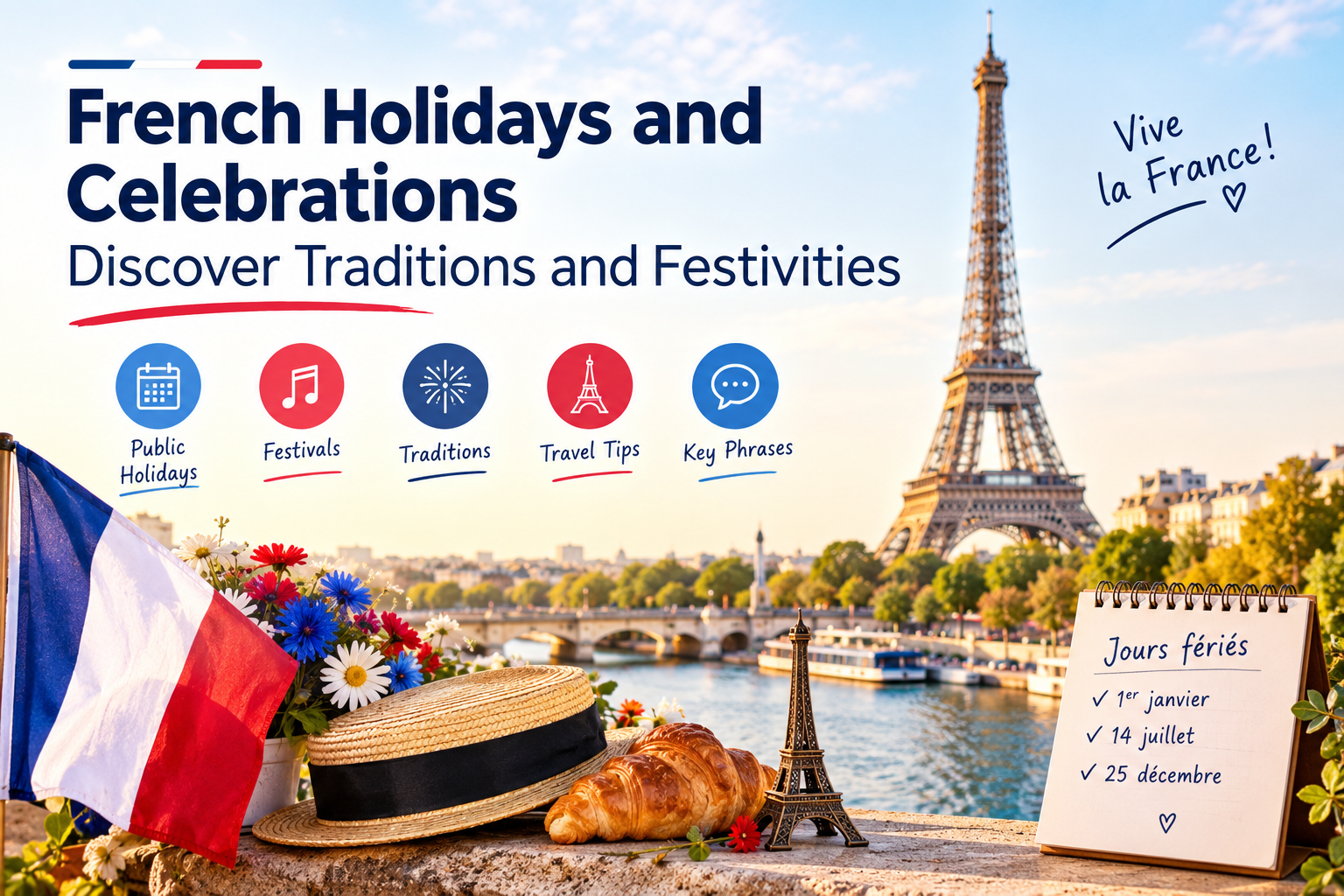
French holidays and celebrations shape the country’s rhythm, from solemn military commemorations to all-night music parties in June and sparkling fireworks in July. If you are planning a trip, or you want to learn French with a cultural lens, understanding public holidays in France and the country’s biggest festivals will help you travel smarter and connect better. This guide brings both worlds together: official jours fériés that affect opening hours and transport, and cultural highlights like Fête de la Musique, Christmas markets, and regional fairs. Along the way, you will pick up practical tips, key phrases, and insider etiquette that we regularly cover in PrepFrench Classes. Consider it your map to the experiences that make France, France.
Free First Step
Take the guesswork out of learning French.
Not sure where to begin, which course fits your goal, or how long it will take? Book a free demo class with PrepFrench Classes and get a personalized plan built around your level, schedule, and goals.
Understanding Public Holidays in France
Public holidays, called jours fériés, are official days off that influence everything from school schedules to shop hours. On these dates, expect many services to run on reduced or Sunday timetables, and plan essential errands around closures. For travelers and French learners, knowing which days matter and how they impact daily life can save time and stress. We often weave these cultural realities into our French lessons, since real-life context helps you speak French confidently.
Major National Public Holidays
- 1 January, Jour de l’An: New Year’s Day. Family time, many shops closed. Public transport on Sunday schedule.
- Lundi de Pâques: Easter Monday. Moving date tied to Easter. Museums and shops vary by city.
- 1 May, Fête du Travail: Labor Day. The most widely respected closure day. Many supermarkets, museums, and even some public transport services do not operate.
- 8 May, Victoire 1945: Victory in Europe Day. Military ceremonies and wreath laying.
- Ascension: A Thursday in May or June, 40 days after Easter. Popular for long weekends.
- Lundi de Pentecôte: Whit Monday. See note below on variability in observance.
- 14 July, Fête Nationale: Bastille Day. Military parade in Paris, fireworks nationwide, and neighborhood parties called bals des pompiers.
- 15 August, Assomption: Assumption Day. Church services in many towns, some shops open in tourist areas.
- 1 November, Toussaint: All Saints’ Day. Families visit cemeteries with chrysanthemums.
- 11 November, Armistice: Armistice Day 1918. Commemorations and wreath ceremonies.
- 25 December, Noël: Christmas Day. Family meals, many closures. 24 December is not a public holiday, though many businesses close early.
Other observances you will hear about, like Epiphany in early January or Chandeleur on 2 February, are not public holidays. They matter culturally, especially for seasonal foods and family traditions, which we cover later in this guide.
Variability in Holiday Dates
Easter-related holidays shift every year. Lundi de Pâques (Easter Monday), Ascension Thursday, and Lundi de Pentecôte (Whit Monday) move with the liturgical calendar. Whit Monday has a particular status. After a government “solidarity day” reform, some companies treat it as a normal workday, others as a day off, and some use a different date for the solidarity contribution. If you travel for work or plan museum visits, verify local schedules for these three moving holidays.
Regional Exceptions: Alsace-Moselle
In Alsace-Moselle, near the German border, there are two extra public holidays: Good Friday and Saint Stephen’s Day on 26 December. If you are exploring Strasbourg or Colmar, expect wider closures on those dates. This region also shines during the Advent season, with some of France’s most famous Christmas markets. When our learners plan a winter trip, we often suggest researching Alsatian opening hours, then building an itinerary that mixes market strolls, cathedral visits, and cozy winstubs for tarte flambée.
Want a deeper understanding of culture while you learn French? Explore our French courses, where teachers connect vocabulary and grammar to real-life events like jours fériés, festivals, and travel scenarios.
Seasonal French Holidays and Celebrations
Beyond official dates, France comes alive with seasonal festivals that locals anticipate all year. These French cultural celebrations are your chance to hear live music in the streets, taste regional specialties, and join citywide gatherings. Below is an at-a-glance tour of the calendar, with ideas to help you time your trip.
Winter Festivals
Christmas Markets (late November to late December): Strasbourg, Colmar, Metz, and Reims are famous for half-timbered squares, mulled wine, and artisanal stalls. Expect festive lights, regional cookies like bredele, and choirs near cathedrals. Book lodging early and bring cash for small purchases.
Lyon Festival of Lights (Fête des Lumières) in early December transforms the city into a light art gallery. Major monuments glow with projection mapping, and the Saône embankments become open-air exhibits. Crowds gather from dusk, so arrive early, use public transport, and plot a loop that avoids bottlenecks.
Nice Carnival (February) and Dunkirk Carnival (January to March) fill the winter gap with color and music. Nice offers flower battles on the Promenade des Anglais, while Dunkirk is known for costumed parades and folk songs. Dress warmly and reserve bleacher seats if you want a guaranteed view.
Spring Celebrations
Printemps de Bourges brings new music to central France in April, mixing small venues with big-name acts. Paris hosts the Foire du Trône funfair each spring with classic rides and carnival snacks. In the south, Feria de Nîmes around Pentecost offers processions, music, and a strong Spanish influence. Spring is also prime time for museum events like Nuit des Musées, when institutions open late and offer free entry in many cities.
- Book trains early around Pentecost and Ascension long weekends, since locals often “bridge” these holidays for mini-breaks.
- If you want Easter markets or processions, check smaller towns in Alsace and Provence, where traditions are more visible.
Summer Events
Fête de la Musique France (21 June) is a national street music party. Amateur bands and pros play in squares, courtyards, and cafes. Paris, Bordeaux, Lyon, and Rennes are top choices, but even small towns participate. Expect noisy nights, closed streets near stages, and free performances. Bring earplugs and a light jacket, then wander.
Bastille Day (14 July) includes the Paris military parade on the Champs-Élysées, air shows, fireworks across the country, and popular bals des pompiers hosted by local fire stations. In Marseille, fireworks reflect on the Vieux-Port. In Annecy, lakeside displays draw families with picnics. Arrive early, follow police guidance, and use public transport.
Avignon Festival turns July into a theatre celebration, with classic and experimental productions staged in cloisters, courtyards, and the Palais des Papes. Bretagne’s Vieilles Charrues festival draws huge crowds for headline music acts, while Bayonne runs a beloved summer feria with white-and-red dress code. Provence lavender fields peak from mid June to early July, adding a scenic flourish to summer trips.
Autumn Festivals and Markets
Journées du Patrimoine (Heritage Days) in mid September open doors to palaces, ministries, and private mansions rarely accessible to the public. Lines can be long, so plan two or three targets and arrive before opening. Across wine regions, harvest season brings vendanges events and tastings, from Champagne to Burgundy and Bordeaux. In Paris, Fête des Vendanges de Montmartre celebrates the neighborhood’s vineyard with parades and food stalls. In November, France welcomes Beaujolais Nouveau, a convivial release party for the year’s first wine.
- For Heritage Days, check government or city sites a few weeks ahead and prioritize rare venues that require free reservations.
- In wine country, book tastings in advance and designate a driver, or rely on local shuttles and trains.
Want vocabulary and cultural tips tailored to your trip dates? Ask for a travel-focused lesson plan when you book your free demo class. Our teachers build speaking practice around real itineraries and festival calendars.
Structured French Courses
Stop learning French the slow way.
Apps and random videos keep you stuck at beginner level forever. PrepFrench Classes gives you a structured path, a real teacher, and speaking practice that moves you forward at every lesson.
Available for: beginners · TEF/TCF exam prep · Canadian PR · work and daily French
Traditions You’ll Notice During Holidays
French holiday traditions shape what you see, taste, and hear in every season. Spotting them adds depth to your trip, and it gives you talking points with locals. Here are highlights to look for, including Bastille Day traditions and seasonal treats you can try as you learn French in context.
Unique Celebratory Practices
May 1, lily-of-the-valley: On Labor Day, people gift small bouquets of muguet for good luck. In Paris, look for pop-up vendors with fragrant sprigs by metro stations. A friendly “Un brin de muguet pour vous” warms any conversation.
Bastille Day traditions: Evening fireworks, public concerts, and the beloved bal des pompiers at local fire stations. Families picnic near rivers, and many cities host free shows. If someone says “On se retrouve au bal des pompiers,” they are inviting you to a lively neighborhood party.
1 April, Poisson d’avril: Children tape paper fish to friends’ backs as a playful prank. Bakeries sell fish-shaped chocolates and pastries. It is a light way to learn idioms and jokes in real settings.
Easter bells and chocolate: In folk tradition, church bells “fly to Rome” before returning with chocolates for children. Many towns organize egg hunts in parks and gardens.
Traditional Foods and Their Significance
Galette des rois in early January celebrates Epiphany. A porcelain charm, the fève, hides inside, and whoever finds it becomes “king” or “queen” for the day, wearing a paper crown. Pair the galette with apple juice or cider, then share the phrase “Qui a eu la fève ?” at the table.
Chandeleur on 2 February centers on crêpes. Families make sweet and savory versions, sometimes flipping a crêpe while holding a coin for good luck. Cafes may run specials, and supermarkets stock up on Nutella and buckwheat flour.
Bûche de Noël rounds off December with a yule log cake, while oysters and foie gras often appear at Christmas and New Year’s meals. In the south, some families keep the Provençal “13 desserts” tradition.
Observations and Encounters during Holidays
Holiday encounters make small phrases powerful. Try a polite “Joyeuses fêtes” in December, “Bonne année” in January, or “Bon 14 juillet” in mid July. You might hear locals say “On fait le pont” around a Thursday holiday, which means they are taking Friday off to create a four-day weekend. These authentic expressions are excellent material for conversation practice in our online French classes, where teachers encourage you to role-play real festival scenarios.
Practical Planning for Visitors During Holidays
Holidays affect what is open, when to travel, and how to book. Use the tips below to avoid surprises and make the most of every celebration.
Understanding Closures and Restricted Hours
- What is open on French public holidays? Many bakeries, small groceries, and some museums open on a holiday morning, then close by early afternoon. May 1 is the big exception: assume near-total closure. Restaurants often open for lunch and dinner on holidays with strong food traditions, like Christmas or Mother’s Day.
- Museums and monuments: They may close on fixed weekly days, often Monday or Tuesday, plus certain holidays. Always check the official site for special hours on Easter Monday, 14 July, 1 November, and 25 December.
- Transport: Trains and metros run reduced or Sunday schedules. For Bastille Day or Fête de la Musique, some lines extend evening hours but close certain stations near crowds for safety.
- Pharmacies: There is always a pharmacie de garde on-call. Ask at your hotel or search online for the nearest one.
- Shops and malls: Tourist zones, outlets, and airports may keep longer hours. Neighborhood boutiques usually close.
Tips for Holiday Travel Planning
- Check dates early: Align your trip with one or two target events instead of cramming the entire calendar.
- Reserve trains and hotels: Long weekends sell out fast, especially Ascension, Pentecost, and 14 July.
- Use public transit for big events: Driving and parking are challenging near parades and fireworks.
- Arrive early for free shows: For Lyon’s lights and Bastille Day fireworks, secure a spot 60 to 90 minutes before start time.
- Pack for the season: Even June nights can be cool. Bring layers, water, and portable chargers.
- Mind local rules: Glass bottles are often restricted near event zones. Check city advisories.
- Bridge days: If a holiday falls on Thursday or Tuesday, plan for Friday or Monday closures due to faire le pont.
- Keep cash for small purchases: Food stalls or village markets may be cash-only or set card minimums.
- Back up plans: Weather can move or cancel outdoor events. Shortlist indoor options like exhibitions or tastings.
- Learn key phrases: A few well-timed questions in French reduce confusion and open doors.
Booking Recommendations and Timeframes
- Nice Carnival and Avignon Festival: Book 3 to 6 months ahead for central lodging and event tickets.
- Lyon Festival of Lights: 2 to 4 months ahead for hotels near the Presqu’île or Vieux Lyon.
- Bastille Day in Paris: If you want a terrace with a view, reserve several weeks in advance and confirm cancellation policies.
- Christmas markets in Alsace: Aim for 2 to 4 months early for Strasbourg and Colmar, then use local trains between towns.
Want a checklist tailored to your dates and French level? Tell us your plan in a quick message and our team will build a mini-lesson with core phrases and expectations. Start here: contact PrepFrench.
Key Phrases and Etiquette for Engaging with French Culture
Language turns a good trip into a memorable one. Use these phrases at French festivals, markets, and holiday gatherings. Then follow the etiquette tips to blend in gracefully.
Essential Phrases for Celebrations
- Bonjour, bonsoir, bonne nuit.
- Joyeuses fêtes. Bonne année. Bon 14 juillet.
- Bonne Fête de la Musique. Bon festival.
- Est-ce que c’est ouvert aujourd’hui / le [date] ?
- Quels sont les horaires du défilé / du concert ?
- Où sont les feux d’artifice ce soir ?
- Faut-il réserver ? Je voudrais deux billets, s’il vous plaît.
- Combien coûte l’entrée ? Est-ce que vous acceptez la carte ?
- Où puis-je acheter du muguet / une galette des rois ?
- Où sont les toilettes les plus proches ?
- Merci beaucoup. C’était superbe. À l’année prochaine.
Cultural Etiquette When Attending Festivals
- Greet first: Start with bonjour or bonsoir before asking questions.
- Mind the queue: Lines are respected, even at pop-up stalls.
- Keep voices modest indoors: Churches and theatres call for lower volume and covered shoulders.
- Ask before filming people: Especially children and performers at close range.
- Follow local glass rules: Many cities ban glass near riverbanks on big nights.
- Tipping: Service is included, but rounding up or leaving small change is appreciated.
- Cash for small vendors: Have coins and small bills for markets and fairground rides.
- Learn a few phrases: Even simple French builds goodwill and better service.
Prefer guided practice? Our French language classes include role-plays for ticket counters, restaurant reservations, and festival info booths, so you can speak French naturally under real-world pressure.
PrepFrench Classes
Ready to start French with a clear plan?
Book a FREE demo class and get a personalized roadmap for your level, goal, and timeline. No pressure, no obligation.
Explore courses:
All French Courses · Full TCF Canada Course · Full TEF Canada Course
FAQ: French Holidays, Festivals, and Planning
What are the official public holidays in France and which ones change dates each year?
France’s national public holidays include 1 January, Easter Monday, 1 May, 8 May, Ascension Thursday, Whit Monday, 14 July, 15 August, 1 November, 11 November, and 25 December. In Alsace-Moselle, Good Friday and 26 December are also public holidays. The moving dates are tied to Easter: Easter Monday, Ascension, and Whit Monday. Because these shift yearly, always check a current calendar. In PrepFrench Classes, we share cultural notes in our French lessons, so learners remember which holidays affect travel plans and which ones, like May 1, bring near-total closures.
Is Whit Monday (Lundi de Pentecôte) a day off everywhere in France?
Not always. After the “solidarity day” reform, some organizations treat Whit Monday as a regular workday while others keep it as a day off or move the solidarity contribution to a different date. Public institutions, museums, and shops may vary. If you plan visits around Whit Monday, verify opening hours locally and check transport schedules. When you learn French with a structured French course, these context notes become part of your vocabulary practice, which helps you make quick decisions on the ground.
What happens on Bastille Day (14 July) and where are the best celebrations?
Expect a morning military parade in Paris on the Champs-Élysées, flyovers, evening fireworks, and lively bals des pompiers across France. Paris, Marseille, Lyon, Annecy, and Carcassonne are known for memorable fireworks. Arrive early, use public transport, and follow crowd guidance. Many travelers plan a short French course before July, focusing on phrases like “Où sont les feux d’artifice ?” At PrepFrench, our online French classes can tailor a quick module with safety tips, etiquette, and festival-ready vocabulary.
Are museums open on French holidays?
Sometimes. Many major museums close on a fixed weekly day, often Monday or Tuesday, and some close on specific holidays like 1 May or 25 December. Others open with special schedules, particularly in tourist hubs. Always check the museum’s official site for holiday updates. If your time is tight, plan a backup list of smaller museums or temporary exhibitions. In our French classes, we practice asking schedule questions clearly, for example “Quels sont vos horaires le 14 juillet ?” which makes on-the-spot planning much easier.
How do the French celebrate Epiphany (galette des rois) and Chandeleur (crêpes)?
For Epiphany in early January, families and offices share a galette des rois with a hidden fève. The person who finds it becomes “king” or “queen” and wears a paper crown. On 2 February, Chandeleur is crêpe day, with sweet and savory toppings at home and in cafes. Many follow a good luck ritual of flipping a crêpe while holding a coin. These customs are perfect conversation starters as you learn French. Try phrases like “Qui a eu la fève ?” or “On fait des crêpes ce soir ?” during your French lessons.
Final Thoughts
French holidays and celebrations are more than marked dates, they are living traditions that shape travel and daily life. Understanding public holidays in France helps you navigate closures, choose the right day for a museum visit, and time those unforgettable evenings under fireworks. Exploring French festivals by season immerses you in music, light, cuisine, and neighborhood rituals that language apps rarely show. Pair that cultural knowledge with targeted French vocabulary, and you will feel at home ordering a galette des rois in January or finding the best spot for Fête de la Musique in June.
At PrepFrench, we connect language to life. Our teachers build French lessons around your trip dates, interests, and goals, so you can speak French confidently in real moments: asking for schedules, chatting at a street concert, or toasting Beaujolais Nouveau with new friends. Culture and language reinforce each other. When they align, you learn faster and remember longer.
✅ Next Step: Book a free demo class with PrepFrench Classes and start learning French the right way.
Curious about French culture and ready to practice with a real teacher? Browse our French courses or message us for a travel-focused lesson plan. Bon voyage et bonnes fêtes.
Written by
Platform Administrator
Practical ideas from the Prep French team for learners building confidence, preparing for exams, and planning their next step in Canada.
Join the discussion
Leave a thoughtful comment.
Your email address will not be published. Comments are reviewed before appearing.