France Natural Landscapes: Biodiversity, Parks and Nature Travel
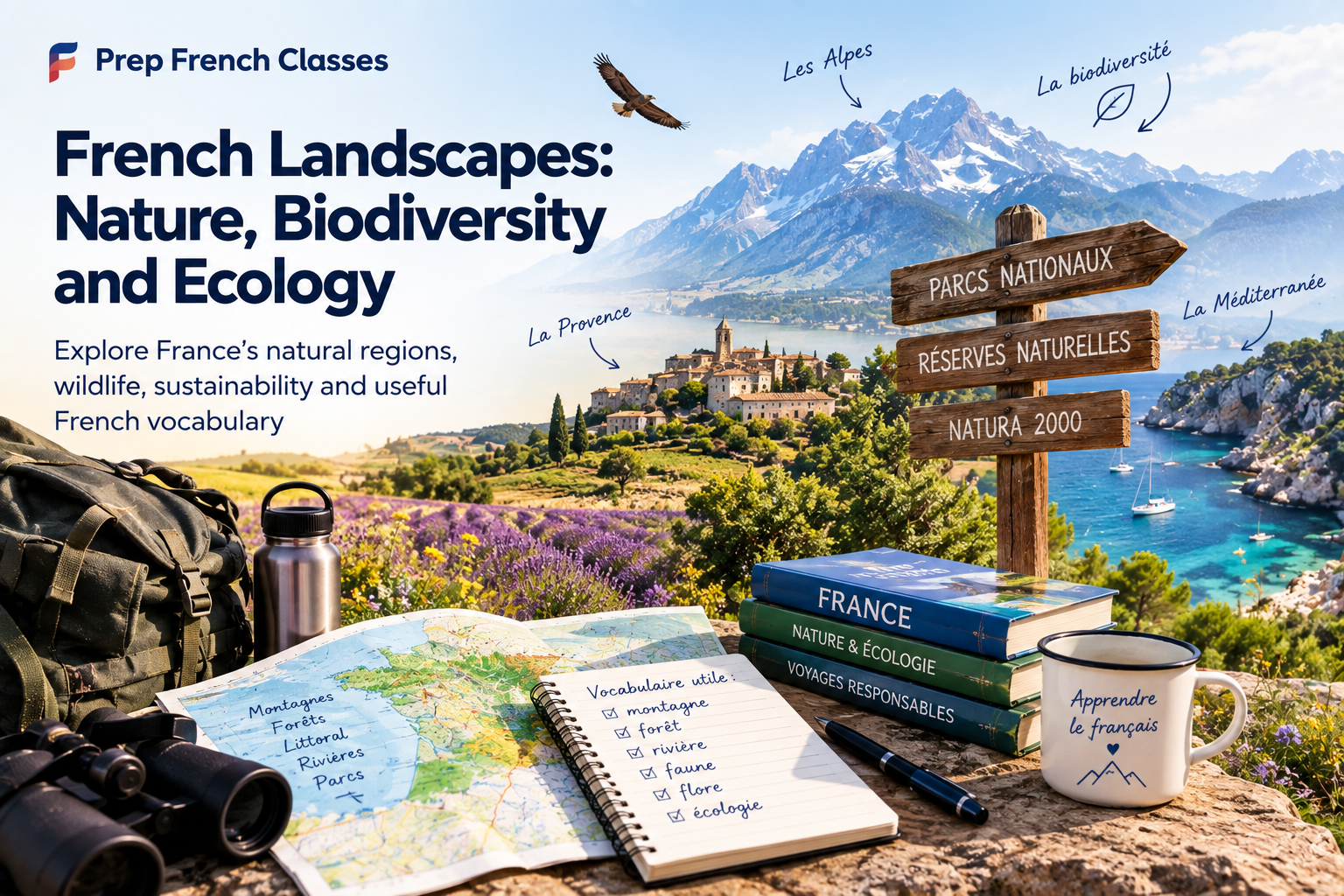
France natural landscapes are astonishingly varied, from glacier-cut Alpine valleys to Mediterranean scrublands, windswept Atlantic dunes, deep beech forests, and vast wetlands teeming with birds. This guide gives you an inspiring, practical tour of French ecosystems, their biodiversity, and how to explore them responsibly. You will also find simple French vocabulary to help you read signs, chat with rangers, and enjoy nature travel in France with confidence. When you pair ecological awareness with smart planning and a little language know-how, your journeys become richer and more respectful of the places you visit.
We begin with a map view of the major natural regions and what makes each one special. Then we look at how nature is protected in France, including national parks in France, regional nature parks France, Natura 2000 sites, and nature reserves. You will discover iconic wildlife, when to visit, low-impact travel choices, and mini-itineraries for easy planning. If you want to speak French more confidently outdoors, PrepFrench Classes can help: structured French lessons and online French classes make it simpler to learn French for travel, culture, and the environment.
If you are new to PrepFrench, start at our homepage or explore our French courses to build a learning plan that fits your travel goals.
Free First Step
Take the guesswork out of learning French.
Not sure where to begin, which course fits your goal, or how long it will take? Book a free demo class with PrepFrench Classes and get a personalized plan built around your level, schedule, and goals.
Major Natural Regions of France: the building blocks of France natural landscapes
From tall mountains to low-lying marshes, from oceanic climates to Mediterranean sunshine, France hosts many distinct biogeographic zones. This diversity shapes French biodiversity, travel seasons, foods, and outdoor culture. Use the quick overview below as a compass for planning trips, then note the French terms that often appear on maps and park signs.
Characteristics of Major Regions
- Alps (les Alpes): France’s highest peaks, glaciers, alpine meadows, and classic wildlife like chamois, ibex, and marmots. Top hiking and skiing region with national parks such as Vanoise and Écrins. Vocabulary to spot: col (mountain pass), glacier, refuge (mountain hut), GR (long-distance trail).
- Pyrenees (les Pyrénées): A wilder barrier along the Spanish border, with deep valleys, pastoral culture, and the dramatic Cirque de Gavarnie. Look for bearded vultures and isards. You will see signs for parc national, réserve naturelle, and pastoralisme.
- Mediterranean (Méditerranée): Calanques sea-cliffs, scrubby garrigue, and turquoise coves near Marseille and Cassis. Summers are hot, springs fragrant with thyme and rosemary. Vocabulary: calanque (inlet), sentier côtier (coastal path), maquis (Mediterranean scrub).
- Atlantic coast (côte Atlantique): Vast sandy beaches, dunes, and pine forests from Brittany to the Basque Country. Look for the Dune du Pilat near Arcachon and wetlands along the Bay of Biscay. Vocabulary: dune, cordon dunaire, estran (intertidal zone).
- Wetlands and rivers (zones humides): The Camargue delta, the Loire valley, the Somme bay, and inland marshes. Bird migrations are spectacular here. Vocabulary: marais (marsh), salin (salt pan), observatoire (bird hide).
- Forests and plateaus (forêts, plateaux): From the Jura and Vosges to the Massif Central and the new Parc national de forêts in Champagne-Burgundy. Ancient beech and oak forests shelter boar, deer, and woodpeckers. Vocabulary: balisage (trail marking), clairière (glade).
- Islands and Corsica (îles, Corse): Corsica mixes rugged mountains and warm coasts. The Scandola Reserve protects cliffs and seabirds. Vocabulary: réserve naturelle, sentier du littoral.
Overview of Overseas Territories
French overseas territories add tropical rainforests, coral reefs, and volcanic peaks to the national picture. In Guadeloupe and Martinique you will hear the rainforest word forêt tropicale humide, in La Réunion look for cirques and pitons, and in French Guiana explore Amazonian ecosystems. For travelers who learn French, these regions offer unique language and ecology moments that standard guides rarely cover.
Tip: bring a pocket list of French habitat words for your map. It makes conversations with local guides and park rangers smoother and your trip with PrepFrench-backed vocabulary far more rewarding.
Protection of Nature in France
France safeguards nature through several designations, each with its own purpose and visitor guidelines. Understanding the basics helps you choose destinations, plan low-impact activities, and read rules on-site in French with confidence.
National Parks vs. Regional Nature Parks
- National Parks (Parcs nationaux): The strongest national protection. Each park includes a strict cœur (core zone) and a surrounding partnership area. Activities that disturb wildlife or fragile habitats are limited in the core. Examples: Vanoise, Écrins, Cévennes, Pyrénées, Mercantour, Calanques, Guadeloupe, La Réunion, Parc amazonien de Guyane, Parc national de forêts, and Port-Cros.
- Regional Nature Parks (Parcs naturels régionaux): Large lived-in territories that protect landscapes, biodiversity, and cultural heritage through a long-term charter. Rules are lighter than in national parks, but sustainability is central. Examples: Camargue, Armorique, Ballons des Vosges, Morvan, Verdon, Landes de Gascogne, and many more.
Common visitor guidelines in both: stay on marked paths, keep noise low, leave no trace, respect seasonal closures, keep drones grounded unless explicitly allowed, and check dog access rules. Learning the terms interdit (forbidden), réglementé (regulated), réserve intégrale (fully protected zone), and bivouac (overnight camping) will help you navigate signs quickly.
Importance of Natura 2000
Natura 2000 is a Europe-wide network for habitats and species of community interest. Sites often overlap with other protections and focus on maintaining or restoring favorable conservation status. For travelers, this means you might hike through cultural landscapes where birds, bats, or orchids thrive. Signs will read site Natura 2000, with suggested good practices such as seasonal trail detours. Understanding why the site matters makes it easier to support local conservation through choices like guided walks and eco-certified stays.
For a friendly French vocabulary boost focused on outdoor signs and rules, browse our French courses and add a short travel module before your trip.
Iconic Landscapes and Wildlife of France
Some places are so distinctive that they become instant favorites for nature travel in France. These landscapes also illustrate how French biodiversity shifts from mountains to delta, from limestone cliffs to Atlantic marshes. Below are highlights with French terms to notice on maps and panels.
Wildlife Spotting in France
- Camargue (Parc naturel régional de Camargue): Pink flamingos (flamants roses), herons, egrets, terns, avocets, and the famous white horses. Best at sunrise or late afternoon near salt pans (salins) and hides (observatoires).
- Vanoise National Park: Alpine ibex (bouquetins), chamois (chamois), and marmots. Scan scree slopes and high meadows near passes. Summer brings wildflowers and butterflies.
- Mercantour and the Southern Alps: Bearded vulture (gypaète barbu) reintroduction success, with soaring silhouettes over rugged valleys. Wolves are present yet elusive, so respect all livestock signage.
- Bay of Somme (Baie de Somme): Migrating shorebirds, seals, and extensive mudflats. Check tide tables and choose guided walks to cross safely.
- Guadeloupe National Park: Tropical birds, waterfalls, and tree ferns. Trails can be steep and slippery, so look for balisage color codes and weather alerts in French.
Unique Landscapes Worth Visiting
- Calanques National Park: Narrow limestone inlets with teal water. Trails are rocky and exposed, closures occur in summer for fire risk. Signs read accès réglementé.
- Gorges du Verdon: France’s grand canyon, ideal for kayaking, hiking, and climbing. Look for griffon vultures circling the cliffs.
- Dune du Pilat: Europe’s tallest sand dune, shaped by Atlantic winds. Go early or late in the day to avoid heat and crowds.
- Cirque de Gavarnie: A monumental glacial amphitheater in the Pyrenees. Waterfalls roar in spring and early summer.
- Parc national de forêts: A younger park protecting ancient broadleaf forests in Champagne and Burgundy. Great for quiet hikes, fungi in autumn, and bird song in spring.
Structured French Courses
Stop learning French the slow way.
Apps and random videos keep you stuck at beginner level forever. PrepFrench Classes gives you a structured path, a real teacher, and speaking practice that moves you forward at every lesson.
Available for: beginners · TEF/TCF exam prep · Canadian PR · work and daily French
When to Visit and How to Travel Sustainably
Seasonal timing shapes what you will see and how crowded trails become. Combine smart timing with low-carbon transport to protect the places you are here to enjoy.
Best Seasons for Different Regions
- Alps and Pyrenees: Late June to September for most high trails. July and August are busiest, June and September balance good weather with fewer crowds. Check snow conditions and refuge opening dates.
- Mediterranean coast: April to early June and September to October for hiking. Summer heat and fire risk bring restrictions in Calanques and other scrubland areas.
- Atlantic coast and dunes: May to October for beaches, spring for wildflowers, autumn for bird migrations.
- Wetlands like Camargue or Somme Bay: Late winter to spring and again in autumn for bird migrations. Sunrise and sunset are prime wildlife hours.
- Forests and plateaus: Spring for birdsong and flowers, autumn for colors and mushrooms. Respect rules on foraging (cueillette).
Eco-friendly Transport Options
France’s rail network is a gift to travelers. Trains typically emit far less CO2 per kilometer than cars, often 10 to 15 times less, and much less than short flights. Combine trains with buses or shuttles to reach park gateways, then hike or cycle locally.
- Rail: TGV for longer jumps, TER regional trains to access trail towns and coasts. Many park areas are signed from stations.
- Shuttles and buses: Summer shuttles run to hotspots like Calanques, Verdon, and major Alpine valleys. Search for navette on park pages.
- Carpool and bike: Look for covoiturage options, rent a bike for short transfers, and favor loop hikes to limit extra transport.
- Low-impact habits: Pack a refillable bottle, reusable containers, and a small trash bag. Stay on marked paths to protect vegetation.
Want quick French phrases for bookings and schedules before you go? Join a short travel-focused module in our online French classes and practice with a PrepFrench teacher.
Practical Mini-Guides for Nature Travelers
Use these short itineraries and packing tips to turn inspiration into a smooth plan. Keep your days flexible so you can follow weather, wildlife news, and local advice in French once you arrive.
Sample Itineraries
- Weekend: Calanques National Park
- Day 1: Marseille to Cassis by train, coastal hike on a marked sentier, swim at a regulated beach. Evening seafood in the port.
- Day 2: Early start for another calanque. Check access status (accès) for fire risk, then return via shuttle (navette).
- 3 days: Vanoise, French Alps
- Day 1: Train to Modane, local bus to a trailhead. Short hike to a lake.
- Day 2: Full-day loop for ibex and marmots. Picnic, then return to base village.
- Day 3: Morning walk, local cheese tasting, train back.
- 4 days: Camargue and Provence
- Day 1: Arles heritage and river walk.
- Day 2: Camargue observatories for flamingos and waders.
- Day 3: Salt pans at Salin-de-Giraud, dunes, and beaches.
- Day 4: Alpilles hills for quieter trails and olive groves.
- 5–7 days: Atlantic dunes and forests
- Mix Arcachon Bay, Dune du Pilat, bike rides through pines, and birding in coastal marshes. Base yourself near a TER line for easy station access.
Packing Essentials for Nature Travel
- Breathable layers, waterproof shell, hat, sunglasses, and sunscreen.
- Refillable water bottle (gourde), reusable snack box (boîte), small trash bag.
- Sturdy shoes, trekking poles if needed, and a headlamp.
- Binoculars, power bank, and a basic first-aid kit.
- Offline maps, trail app, and paper map for backup.
- Cash for rural buses or refuges, card for towns.
- Respectful photography mindset: no drones unless explicitly allowed.
Park etiquette reminders: stay on sentiers balisés (marked paths), keep dogs leashed where permitted, never feed wildlife, and maintain quiet near hides. Learn quick terms like bivouac (one-night wild camp), feux interdits (fires forbidden), and zone de quiétude (quiet zone) to follow local rules without stress.
For more practical language, book a quick travel add-on with PrepFrench Classes through our free demo and we will tailor a short French course to your itinerary.
Essential French Language for Nature Travel
These words and phrases unlock signs, maps, and ranger talks. Save them to your phone or notebook before you go.
Key Terms for Nature Enthusiasts
- parc national = national park, parc naturel régional = regional nature park
- réserve naturelle = nature reserve, site Natura 2000 = Natura 2000 site
- cœur du parc = park core zone, accès réglementé = regulated access
- sentier balisé = marked trail, balisage = waymarking
- faune et flore = fauna and flora, espèce protégée = protected species
- bivouac = overnight camp, feux interdits = fires forbidden
- observatoire = hide, marais = marsh, falaise = cliff
Useful Phrases for Park Visits
- Où commence le sentier pour le lac ? Where does the trail to the lake start?
- Y a-t-il une navette aujourd’hui pour le parc ? Is there a shuttle to the park today?
- Est-ce que les chiens sont autorisés ici ? Are dogs allowed here?
- C’est balisé en quelle couleur ? What color is the waymarking?
- Nous respectons les consignes du parc. We follow the park rules.
- Je pars pour une randonnée de quatre heures. I am leaving for a four-hour hike.
To practice these with a real teacher before you fly, join our online French classes. A short PrepFrench course focused on travel and nature will make your trip smoother and more immersive.
FAQ
How many national parks are there in France?
France has 11 national parks covering mountain, marine, forest, and tropical ecosystems. In mainland France you will find Vanoise, Écrins, Cévennes, Pyrénées, Mercantour, Calanques, Port-Cros, and Parc national de forêts. Overseas, Guadeloupe, La Réunion, and the Amazonian Park of French Guiana protect rainforest and volcanic landscapes. If you plan to visit multiple parks, learning basic French vocabulary with structured French lessons helps with trail signs, safety information, and transport. Try a travel module with PrepFrench Classes to prepare in a focused way before your trip.
What are the differences between national parks and regional nature parks in France?
National parks (parcs nationaux) include a strict core zone with strong protections and a surrounding partnership area. Rules in the core limit disturbance to wildlife and habitats. Regional nature parks (parcs naturels régionaux) are large inhabited areas protected by a regional charter, with lighter rules focused on sustainability and heritage. Both ask visitors to stay on marked paths and follow seasonal closures. If you learn French terms like réglementé, cœur du parc, and bivouac in a short French course, you will read park panels faster and travel with more confidence.
When is the best time to visit the French Alps for hiking?
Late June to late September is the core season for most Alpine hikes, with July and August being the busiest. June and September offer fewer crowds, lingering snow early in summer, and cooler temperatures. High passes may hold snow into July, and afternoon thunderstorms can develop in hot spells, so start early and check local forecasts. Many mountain huts (refuges) open from June to September. If you want French phrases for weather, transport, and hut bookings, PrepFrench Classes can tailor online French classes to your route and dates.
Do I need to speak French to visit national parks?
You can visit without speaking French, yet even a small toolkit of words makes everything easier: reading safety signs, asking for bus times, or confirming trail conditions. Many rangers and tourism staff speak some English in popular areas, but signage is often primarily in French. Learning a few set phrases in a focused French course helps you travel independently and respectfully. Book a free demo with PrepFrench to design a short plan that fits your trip, then practice key phrases with a teacher before you go.
What wildlife can I expect to see in the Camargue region?
The Camargue is famous for pink flamingos (flamants roses), white horses, black bulls, herons, egrets, stilts, avocets, terns, and marsh harriers. Migratory birds peak in spring and autumn, with sunrise and sunset offering the best light and activity. Look for observatoires (hides) near salt pans and lagoons. Bring binoculars and insect repellent. If you learn French bird names with quick French lessons, you can chat with local guides, interpret panels, and spot more species. PrepFrench offers short, travel-ready online French classes for nature lovers.
Final Thoughts
France natural landscapes are not just scenic backdrops, they are living classrooms. From the rocky Calanques to the cool Alpine meadows, and from the Atlantic dunes to tropical forests overseas, each region holds a different chapter of French biodiversity. When you understand how ecosystems work and why protections exist, you travel with lighter steps and see more along the way.
Pack curiosity alongside your gear, choose lower-carbon routes, and learn a handful of French phrases. With a short plan from PrepFrench Classes, you will speak French with more ease in visitor centers, on trailheads, and in rural towns. Start on the PrepFrench homepage, browse structured French courses, or book a free demo to shape your route and your language goals together. That way, your next trip supports nature and brings you closer to the people who protect it every day.
✅ Next Step: Book a free demo class with PrepFrench Classes and start learning French the right way.
Keep exploring. A little French, a thoughtful plan, and a respect for local rules make every path in France more meaningful.
PrepFrench Classes
Ready to start French with a clear plan?
Book a FREE demo class and get a personalized roadmap for your level, goal, and timeline. No pressure, no obligation.
Explore courses:
All French Courses · Full TCF Canada Course · Full TEF Canada Course
Written by
Platform Administrator
Practical ideas from the Prep French team for learners building confidence, preparing for exams, and planning their next step in Canada.
Join the discussion
Leave a thoughtful comment.
Your email address will not be published. Comments are reviewed before appearing.