Exploring French Culture in Canada by Province
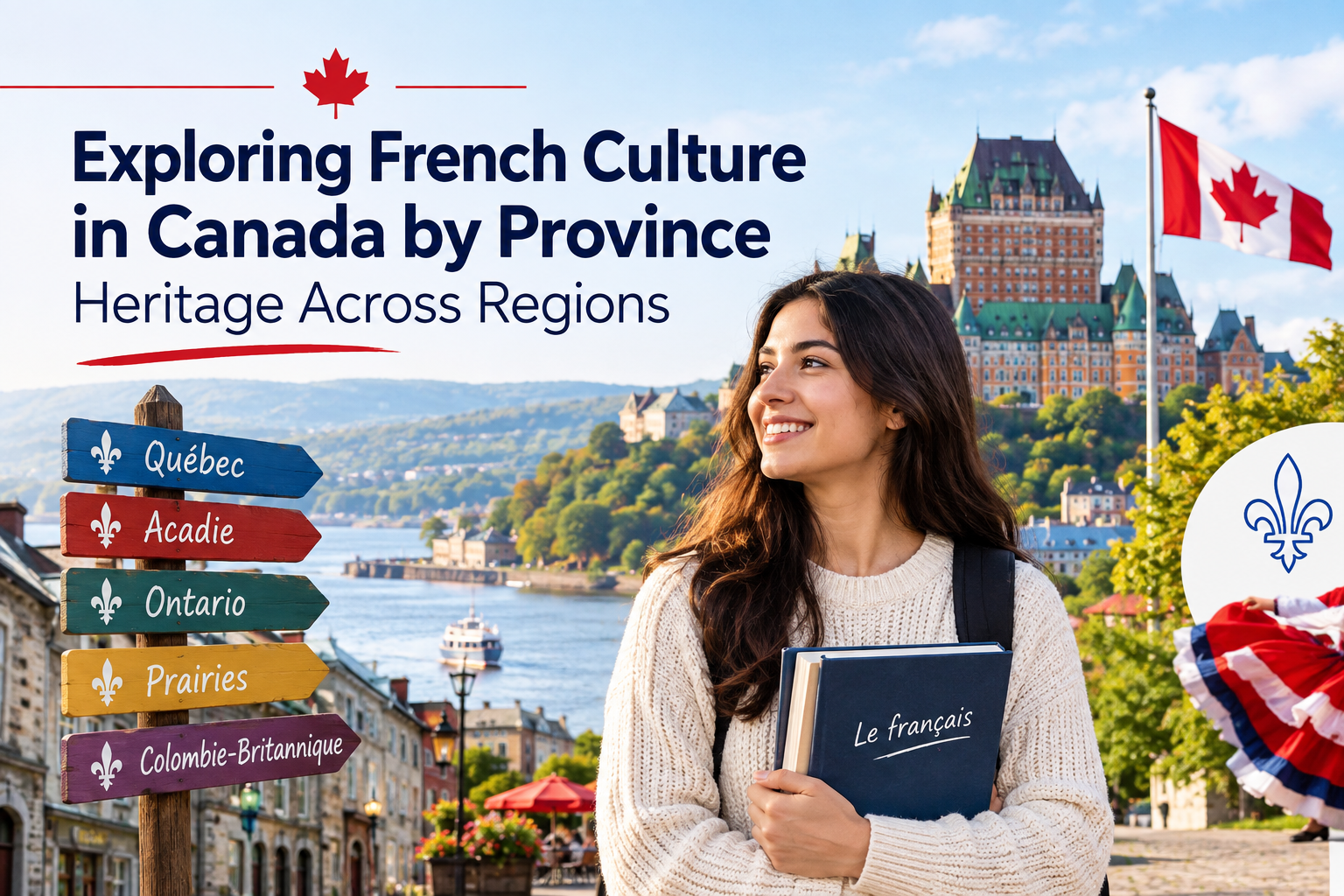
French culture in Canada by province is not a single story. It is a mosaic that stretches from Quebec’s historic heart to Acadian villages along the Atlantic, to vibrant Francophone enclaves in Ontario, the Prairies, and the West Coast. Canada is officially bilingual, and while Quebec remains the cultural center of Francophone life, every region adds its own flavor to the French language, traditions, and community activities. If you plan to live, study, work, or simply travel in bilingual Canada, understanding these regional differences will enrich your experience and your French learning journey.
At PrepFrench, we believe language and culture are inseparable. Knowing where French is used, how communities gather, and which festivals animate the calendar helps you practice real conversations, not just memorize vocabulary. As you explore, keep an eye out for local Francophone associations, festivals, and French-language schools that welcome newcomers and language learners. If you are just getting started, our home page and courses lay out clear options to learn French with a structured plan and a supportive teacher.
This province-by-province guide blends cultural highlights with practical tips: where to hear different accents, which events to attend, and how to connect with Francophones near you. Whether your interest is Quebec French culture, Acadian culture in Canada, or growing Western networks, you will find the context you need to choose the right French lessons and make steady progress with PrepFrench Classes.
Free First Step
Take the guesswork out of learning French.
Not sure where to begin, which course fits your goal, or how long it will take? Book a free demo class with PrepFrench Classes and get a personalized plan built around your level, schedule, and goals.
The Bilingual Landscape of Canada
Canada’s bilingual framework shapes daily life in visible and subtle ways. Federal institutions serve the public in both English and French, and provincial realities vary widely. Quebec is majority French-speaking by law and custom, and New Brunswick is the only officially bilingual province. Elsewhere, strong minority-language communities keep French alive through schools, media, and cultural organizations. For learners, this means two opportunities: national access to public services in French and region-specific cultures where you can practice and connect.
The Official Languages Act
Canada’s Official Languages Act guarantees service in English and French at the federal level. It also encourages the vitality of minority-language communities across the country. In practice, you will see bilingual signage at federal offices, language-of-choice options on government hotlines, and growing recognition that Francophone communities exist in every province. New Brunswick’s provincial services are bilingual, while other provinces adopt targeted measures such as French school boards, health networks, or municipal programs that support Francophones.
- Language use (2021 Census): roughly one in five Canadians report French as a mother tongue, and about 18 percent say they are bilingual in English and French.
- French-speaking provinces in Canada: Quebec is majority Francophone, New Brunswick has a large Acadian population, and Ontario hosts the largest Francophone community outside Quebec.
- Growing communities exist across Manitoba, Saskatchewan, Alberta, and British Columbia, supported by local associations and French-language education.
Regional Variations of French
French in Canada is not monolithic. Quebec French, Acadian French, Chiac (a lively blend heard in New Brunswick), Franco-Ontarian varieties, and Métis heritage languages like Michif each reflect distinct histories and identities. For learners, exposure to different accents improves listening skills and cultural fluency. PrepFrench Classes build this awareness into lessons: you practice clear standard French, then learn to navigate regional expressions and rhythms, so you can communicate confidently across Canadian provinces.
If you plan to study or work in a bilingual environment, a structured French course will help you adapt to these regional differences while building core skills in grammar, vocabulary, and pronunciation.
Quebec: The Heart of French Culture
Quebec anchors French heritage in Canada with a robust cultural sector, strong language laws, and year-round events. The Charter of the French Language (often called Bill 101) affirms French as the language of public life in the province. For learners, daily immersion is easy: signage, media, and community life largely operate in French. Whether you stroll through Old Quebec, attend a neighborhood festival in Montreal, or grab a coffee in Sherbrooke, you will hear the language everywhere and discover traditions that blend European roots with North American creativity.
Cultural Institutions in Quebec
- Place des Arts (Montreal): a major hub for music, theater, and dance that showcases Francophone and international acts.
- Musée de l’Amérique francophone (Quebec City): explores French heritage in North America, from early settlers to contemporary communities.
- Bibliothèque et Archives nationales du Québec (BAnQ): a vast cultural resource for literature, history, and media in French.
- Neighborhood cultural houses and local theaters: smaller venues across cities like Quebec City, Gatineau, and Trois-Rivières support emerging Francophone artists.
Quebec’s institutions make it easy to combine language practice with culture. If you are studying with PrepFrench, try aligning weekly French lessons with a cultural outing, like a guided museum tour or a French-language play. Using your new vocabulary in real contexts accelerates progress and builds confidence.
Major Festivals Celebrating Francophone Heritage
- La Fête nationale du Québec: celebrated on June 24 with concerts, parades, and neighborhood events honoring Quebec’s identity.
- Les Francos de Montréal: a flagship festival dedicated to Francophone music from Quebec, Canada, and the wider Francophonie.
- Festival d’été de Québec: a massive summer event bringing together French and international artists in the heart of Quebec City.
- Carnaval de Québec: a winter celebration with parades, snow sculptures, and family-friendly French programming.
Attending these festivals is a powerful way to strengthen listening comprehension and cultural understanding. If your long-term goals include Canadian PR or bilingual career paths, consider pairing cultural immersion with formal prep like the Full TCF Canada Course or the Full TEF Canada Course at PrepFrench.
Atlantic Provinces: Acadian Culture and Heritage
Acadian culture in Canada thrives in the Atlantic provinces, where French settlers developed distinct traditions after the 17th century. Despite historical upheavals, Acadian communities preserved unique music, foodways, and a warm, resilient identity. Today, you can hear Acadian French, enjoy seafood-rich cuisine, and join festivals that celebrate a living heritage along the coasts of New Brunswick, Nova Scotia, Prince Edward Island, and Newfoundland and Labrador.
Key Acadian Regions
- New Brunswick: Caraquet and the Acadian Peninsula, Bathurst, Shippagan, Tracadie, Moncton and Dieppe (home of Chiac, a dynamic Acadian variety).
- Nova Scotia: Clare and Argyle in southwestern Nova Scotia, plus Chéticamp in Cape Breton. Grand-Pré is a key heritage site tied to Acadian history.
- Prince Edward Island: the Evangeline region, including Abram-Village and Wellington, keeps Acadian arts and music front and center.
- Newfoundland and Labrador: the Port au Port Peninsula hosts a small but passionate Francophone community with Acadian roots.
For learners, Acadian communities are welcoming and proud to share their heritage. Join local events, volunteer at cultural centers, or attend conversation circles. Many newcomers find that Acadian hospitality encourages them to speak up, make mistakes, and improve quickly.
Festivals Celebrating Acadian Culture
- Festival acadien de Caraquet (NB): a summer showcase of music, theater, and the iconic Tintamarre on August 15, National Acadian Day.
- Congrès mondial acadien: an international gathering held every five years that rotates among Acadian regions and the diaspora.
- Local events in PEI and Nova Scotia: community fairs, music nights, and culinary festivals that highlight Acadian cuisine and crafts.
Pair these experiences with targeted practice in your online French classes: ask your French teacher for listening drills using Acadian media, then try the same expressions in live conversation. This builds cultural confidence and practical fluency.
Structured French Courses
Stop learning French the slow way.
Apps and random videos keep you stuck at beginner level forever. PrepFrench Classes gives you a structured path, a real teacher, and speaking practice that moves you forward at every lesson.
Available for: beginners · TEF/TCF exam prep · Canadian PR · work and daily French
The Francophone Experience in Ontario
Ontario is home to the largest Francophone population outside Quebec, with vibrant communities spread across the province. You will find French-language schools, colleges, media, and cultural centers that support daily life in French. Franco-Ontarian identity is proudly visible in festivals, green-and-white flags, and a strong network of associations that welcome newcomers and language learners.
Large Francophone Communities
- Ottawa and Eastern Ontario: Orléans, Vanier, and the Prescott-Russell region host dynamic Francophone neighborhoods and organizations.
- Northern Ontario: Sudbury, Timmins, Hearst, Kapuskasing, and North Bay preserve deep Francophone roots and community schools.
- Southwestern and Central hubs: Windsor, Welland, and parts of Toronto support active French-speaking networks, media, and meetups.
Ontario’s education system includes French-language public and Catholic school boards, as well as immersion programs in English boards. Post-secondary institutions like La Cité and Collège Boréal offer programs in French, and TFO provides Francophone educational media. For adult learners, pairing local events with structured French courses keeps motivation high while you practice real-life communication.
Cultural Events in Ontario
- Franco-Ontarian Day (September 25): celebrations across cities highlight music, literature, and community pride.
- Festival franco-ontarien (Ottawa): a flagship music and culture event featuring artists from Ontario, Quebec, and beyond.
- Local theater and film series: Francophone companies and film festivals in Ottawa, Sudbury, and Toronto showcase French-language arts.
Newcomers often start with neighborhood conversation nights or bilingual networking events. Ask your PrepFrench teacher to simulate typical Ontario scenarios, like booking health services in French or attending a parent-teacher meeting at a French-language school. This targeted practice prepares you for daily interactions and builds confidence quickly.
The Prairie Provinces and the Métis Heritage
In Manitoba and Saskatchewan, Francophone communities blend with a rich Métis heritage rooted in the Red River region. The Métis Nation, shaped by Indigenous and European ancestry, developed distinct traditions and the Michif language, which includes elements of French and Cree. Today, places like St. Boniface in Winnipeg and Fransaskois communities in Saskatchewan celebrate this history through festivals, museums, and education.
Métis Culture and Language
- St. Boniface (Winnipeg): the historic Francophone district hosts museums, galleries, and the Université de Saint-Boniface.
- Louis Riel and Red River heritage: key to understanding how French, Indigenous, and settler histories intersect on the Prairies.
- Michif language: a unique expression of Métis identity, valuable for learners interested in the broader linguistic landscape of Western Canada.
As you learn French, exploring Métis stories provides cultural depth and historical perspective. It also expands your understanding of how French has adapted across Canada, influencing vocabulary, place names, and community identities.
Festivals and Celebrations in the Prairies
- Festival du Voyageur (Winnipeg): Manitoba’s largest winter festival, celebrating Francophone and Métis heritage with music, sculpture, and traditional food.
- Fête Fransaskoise (Saskatchewan): an annual gathering that showcases Fransaskois culture, music, and community spirit.
- Local French cultural weeks: schools and associations hold events that welcome both native speakers and learners to participate.
Preparing for these events can be part of your language plan. In your PrepFrench lessons, practice festival-related vocabulary, then attend a concert or workshop and try a short conversation in French. Small wins reinforce progress and keep motivation steady.
Western Provinces: Growing Francophone Communities
Alberta and British Columbia have seen steady growth in Francophone and Francophile populations, driven by interprovincial migration, international arrivals, and strong employment markets. You will find vibrant associations, French-language schools, and cultural calendars that make it possible to live part of your daily life in French - even far from Quebec and the Atlantic.
Key Francophone Associations
- Alberta: Francophone associations in Edmonton and Calgary, community centers, and French-language school districts support cultural life and services.
- British Columbia: the Conseil scolaire francophone operates province-wide French-language schools, and historic neighborhoods like Maillardville (Coquitlam) host events celebrating BC French culture.
- City hubs: Vancouver, Victoria, Kelowna, Calgary, Edmonton, and Fort McMurray often host meetups, French cinema nights, and family-friendly cultural days.
For learners living in Western Canada, online French classes provide schedule flexibility, while local associations offer in-person practice. This blended approach keeps you progressing, even with a busy work or study routine.
Employment and Networking Opportunities
- Jobs: tourism, aviation, customer support, education, and government roles often value bilingual candidates.
- Networking: French-language business lunches, after-work “5 à 7” socials, and newcomer coffee meetups create low-pressure speaking opportunities.
- Education and families: French-language and immersion schools, playgroups, and cultural camps help children and parents build community in French.
To make the most of Western networks, ask your PrepFrench teacher to practice job interview scenarios, write concise French emails, and prepare short self-introductions. This practical focus translates directly into career progress and community connections.
PrepFrench Classes
Ready to start French with a clear plan?
Book a FREE demo class and get a personalized roadmap for your level, goal, and timeline. No pressure, no obligation.
Explore courses:
All French Courses · Full TCF Canada Course · Full TEF Canada Course
Frequently Asked Questions
Which Canadian provinces have the strongest French culture outside Quebec?
Outside Quebec, New Brunswick and Ontario stand out for robust Francophone communities and cultural life. New Brunswick’s Acadian regions, especially the Acadian Peninsula, Moncton, and Dieppe, offer lively festivals and distinctive accents. Ontario has the largest Francophone population outside Quebec, with major hubs in Ottawa, Eastern Ontario, and Northern Ontario cities like Sudbury and Hearst. Manitoba’s St. Boniface district in Winnipeg is another key center, anchored by Festival du Voyageur. As you learn French, look for local associations and events, and consider structured French classes with PrepFrench to connect language study to real community experiences.
Is New Brunswick really the only officially bilingual province, and what does that mean for daily life?
Yes. New Brunswick is Canada’s only officially bilingual province, which means provincial services are available in both English and French. In daily life, you will see bilingual signage, can request service in French, and will find schools, media, and community programs serving Francophone residents. The Acadian presence is strong, with regions like Moncton-Dieppe and the Acadian Peninsula offering frequent French-language events. For newcomers, this provides practical opportunities to use French in real contexts. If you want a jump start, PrepFrench’s French lessons and conversation practice help you build confidence before you arrive.
Where can newcomers find French-language schools and immersion programs outside Quebec?
Across Canada, you will find both French-language school boards and French immersion programs. Ontario offers a province-wide network of French-language public and Catholic boards, plus immersion streams in English boards. New Brunswick and the Atlantic provinces maintain strong Acadian school systems. Manitoba, Saskatchewan, Alberta, and BC also operate French-language schools and growing immersion options. For adults, online French classes with PrepFrench pair well with local conversation groups and cultural events, so you can study systematically and practice naturally in your community.
How different is Acadian French from Quebec French, and will I understand both?
Quebec French and Acadian French share core grammar and vocabulary, so you will understand most of what you hear with practice. Differences appear in pronunciation, rhythm, and certain expressions, especially in Chiac, a dynamic Acadian variety heard in New Brunswick. The best way to adapt is exposure: listen to both accents through music, radio, and events, then practice with a teacher. PrepFrench integrates accent awareness into each French course, helping you tune your ear so you can communicate confidently across regions.
Which cities outside Quebec offer the most opportunities to live and work in French?
Ottawa and Eastern Ontario, Greater Moncton in New Brunswick, and Winnipeg’s St. Boniface district provide strong day-to-day opportunities in French. Northern Ontario cities like Sudbury and Hearst, and New Brunswick’s Acadian Peninsula, also offer extensive French services and cultural life. In Western Canada, Edmonton, Calgary, Vancouver, and Victoria have growing Francophone networks and bilingual roles in government, tourism, and customer support. If you are preparing for bilingual employment or PR language goals, consider structured prep like PrepFrench’s Full TCF Canada Course or Full TEF Canada Course.
Final Thoughts: French Culture in Canada by Province, in Summary
From Quebec’s historic avenues to New Brunswick’s Acadian villages, from Ottawa’s bilingual neighborhoods to Winnipeg’s Métis celebrations, French culture in Canada is richly diverse. Each province tells a different chapter of the story. Understanding these regional layers will make your French more practical, your listening sharper, and your conversations more enjoyable. It will also point you toward communities where you can belong, practice, and grow.
Keep your learning plan simple and consistent. Combine a structured path with PrepFrench Classes and weekly cultural touchpoints near you: a market chat, a museum tour, a film night, or a festival weekend. This routine turns French from a classroom subject into a living language you use often and remember longer. If you want guidance on the best next step for your goals, reach out and we will help you choose the right French course and study rhythm.
Whether your path leads to Quebec French culture, Acadian roots, or West Coast networks, the door into Francophone communities is open. Start where you are, practice consistently, and let culture be your guide.
✅ Next Step: Book a free demo class with PrepFrench Classes and start learning French the right way.
Language learning is a journey. Immerse yourself in festivals, conversations, and local stories, and your French will grow with every experience.
Written by
Platform Administrator
Practical ideas from the Prep French team for learners building confidence, preparing for exams, and planning their next step in Canada.
Join the discussion
Leave a thoughtful comment.
Your email address will not be published. Comments are reviewed before appearing.