Colors in French: Grammar, Expressions & Symbolism
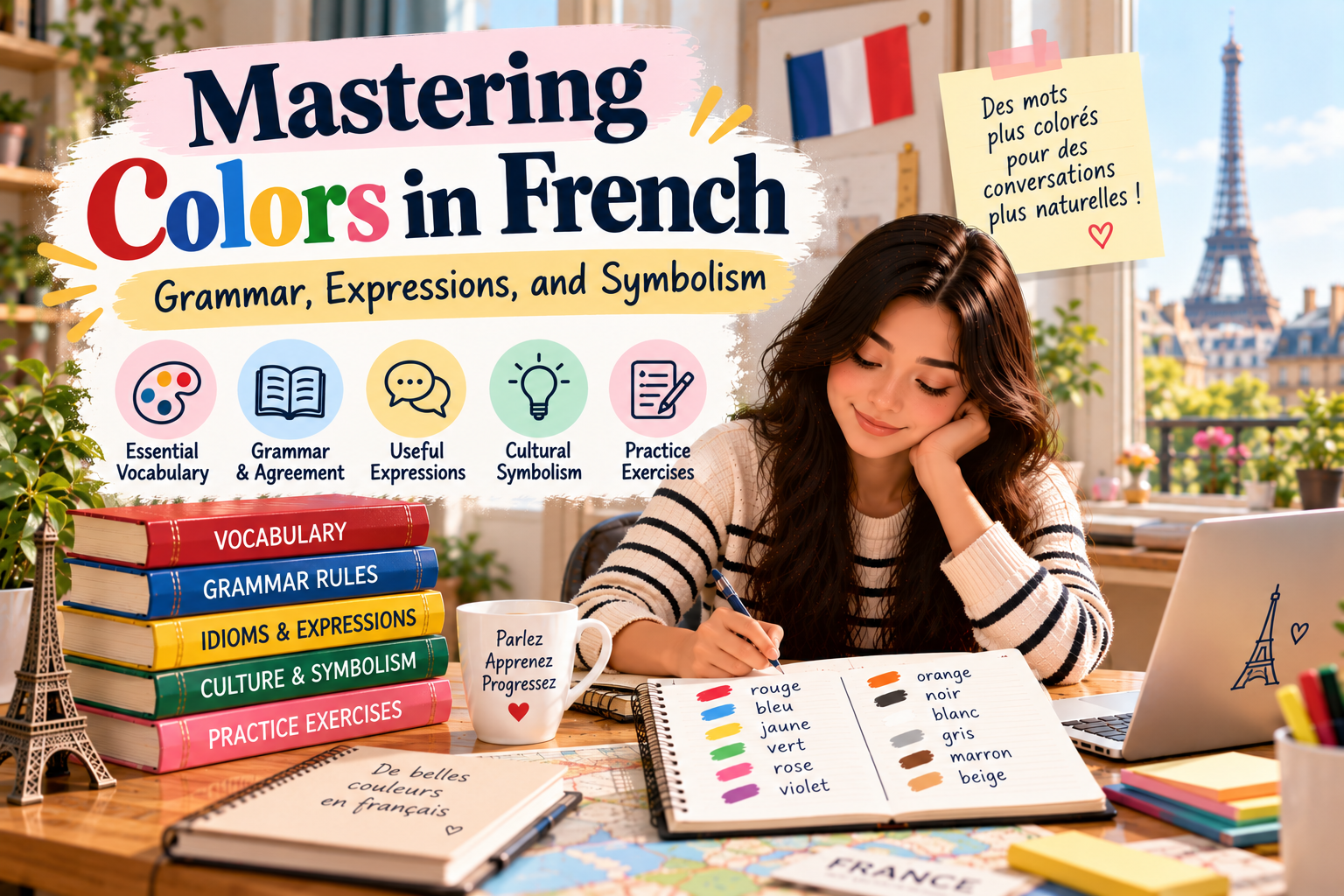
If you want your French to sound natural in real conversations, you must master colors in French. Color words are everywhere: in descriptions, clothing, food, emotions, even traffic rules. Learning French color vocabulary gives you instant speaking power, and understanding how French color adjectives agree with nouns unlocks a core part of French grammar. In this guide, you will build a practical color toolkit: the essential vocabulary, pronunciation tips, agreement rules, useful idioms, and the cultural symbolism that native speakers feel when they hear these colors. You will also find hands-on exercises to test yourself. If you prefer structured learning with feedback from a teacher, PrepFrench can help you turn this knowledge into confident speech through our step-by-step French courses and live practice.
Free First Step
Take the guesswork out of learning French.
Not sure where to begin, which course fits your goal, or how long it will take? Book a free demo class with PrepFrench Classes and get a personalized plan built around your level, schedule, and goals.
Colors in French: Understanding the Core Vocabulary
Start with the French colors list that you will use every day. Learn the pronunciation, then put each word into a short sentence. If possible, read these aloud and record yourself. In PrepFrench Classes, students practice these words with a teacher to fix sounds like r, nasal vowels, and the eu/œu sound in bleu.
Common Colors
| French | Pronunciation (IPA) | English | Example (FR) + translation |
|---|---|---|---|
| rouge | [ʁuʒ] | red | La voiture est rouge. The car is red. |
| bleu / bleue | [blø] / [blø] | blue | Une chemise bleue. A blue shirt. |
| vert / verte | [vɛʁ] / [vɛʁt] | green | Un pull vert. A green sweater. |
| jaune | [ʒon] | yellow | Des fleurs jaunes. Yellow flowers. |
| noir / noire | [nwaʁ] / [nwaʁ] | black | Un sac noir. A black bag. |
| blanc / blanche | [blɑ̃] / [blɑ̃ʃ] | white | Une robe blanche. A white dress. |
| gris / grise | [gʁi] / [gʁiz] | grey | Un ciel gris. A grey sky. |
| rose | [ʁoz] | pink | Des ballons roses. Pink balloons. |
| violet / violette | [vjɔlɛ] / [vjɔlɛt] | purple | Une jupe violette. A purple skirt. |
| orange (inv.) | [ɔʁɑ̃ʒ] | orange | Des manteaux orange. Orange coats. |
| marron (inv.) | [maʁɔ̃] | brown | Des chaussures marron. Brown shoes. |
| beige (inv.) | [bɛʒ] | beige | Des murs beige. Beige walls. |
| doré / argenté | [dɔʁe] / [aʁʒɑ̃te] | golden / silver | Un cadre doré. An golden frame. |
| bleu clair (inv.) / bleu foncé (inv.) | [blø klɛʁ] / [blø fɔ̃se] | light blue / dark blue | Des rideaux bleu clair. Light blue curtains. |
Pronunciation Guide
Focus on four sound families:
- The French r: rouge [ʁuʒ], vert [vɛʁ]. The sound comes from the back of the throat, not the tongue tip.
- Nasal vowels: blanc [blɑ̃], marron [maʁɔ̃]. Let air flow through nose and mouth, do not add a final n sound.
- Eu/œu: bleu [blø], a rounded vowel made with lips pushed forward. Avoid saying bloo.
- Final consonants: often silent. Vert adds a t in the feminine (verte), which you pronounce.
In live online French classes, your teacher will target the exact sounds you struggle with and give you short drills that pay off quickly.
Example Sentences
Use color words in short, high-frequency phrases:
- J’aime le café noir. I like black coffee.
- Elle porte une écharpe rouge. She is wearing a red scarf.
- Mes yeux sont marron. My eyes are brown.
- Nous cherchons une valise bleu foncé. We are looking for a dark blue suitcase.
- Le chat blanc dort. The white cat is sleeping.
- Tu préfères la voiture grise ou la bleue. Do you prefer the grey car or the blue one.
Grammar Rules for Color Adjectives
French color adjectives follow standard agreement rules: they usually come after the noun and agree in gender and number, with a few invariable forms. Mastering these patterns will upgrade all your descriptions, not just colors.
Gender and Number Agreement
- Most colors agree: un pull vert, une jupe verte, des pulls verts, des jupes vertes.
- Irregular feminine forms: blanc to blanche, sec to sèche (used in compound senses), favori to favorite in extended color names. Classic colors to memorize: blanc or blanche, violet or violette.
- Adjectives ending in e are the same in masculine and feminine: une chemise rose, un pantalon rose.
- Plural is usually formed with s: des sacs noirs, des robes blanches.
Placement of Adjectives
Color adjectives normally come after the noun:
- Une voiture bleue, des chaussures noires, un sac gris.
Advanced stylistic uses can move a color before the noun for effect, often creating a figurative sense: une noire colère, une verte prairie. Keep this for later. In everyday French, colors go after the noun.
Common Exceptions
Some colors are invariable, which means they do not change for gender or number. This is key for accuracy.
- Invariable colors that are also nouns of fruits, materials, or objects: orange, marron, turquoise, crème, chocolat, ivoire, indigo, kaki, olive, bronze. Example: des pantalons orange, des yeux marron. Many speakers keep crème invariable, although you may see variable forms in fashion contexts.
- Compound colors stay invariable: des chemises bleu clair, des vestes bleu foncé, des gants vert pâle, des rideaux jaune citron. If there is a hyphen or a second word, do not add s or e.
- Colors linked by et describing flags or fixed combinations often stay invariable: le drapeau bleu blanc rouge.
- Rose, mauve, pourpre, écarlate, fauve usually agree like normal adjectives: des jupes mauves, une écharpe rose, des fleurs pourpres.
- Châtain, used mainly for hair, is commonly invariable in gender and takes s in the plural: des cheveux châtains, une femme châtain. The feminine form châtaine exists but is rare.
Want targeted practice on agreement with feedback. These topics are drilled step by step in our French lessons.
Structured French Courses
Stop learning French the slow way.
Apps and random videos keep you stuck at beginner level forever. PrepFrench Classes gives you a structured path, a real teacher, and speaking practice that moves you forward at every lesson.
Available for: beginners · TEF/TCF exam prep · Canadian PR · work and daily French
Idiomatic Expressions with Colors
Idioms show how colors work beyond literal description. Learn a few, and you will instantly sound more natural in conversation and listening exercises.
Common French Color Idioms
- Voir la vie en rose: to see life positively. Après sa promotion, elle voit la vie en rose.
- Avoir une peur bleue: to be terrified. Il a eu une peur bleue pendant le vol.
- Rire jaune: to force a laugh or laugh bitterly. Elle a ri jaune en entendant la blague.
- Être vert de rage: to be furious. Il était vert de rage après le match.
- Donner le feu vert: to give the green light. Le chef nous a donné le feu vert pour lancer le projet.
- Être dans le rouge: to be in debt or over budget. Ce mois-ci, je suis dans le rouge.
- Passer une nuit blanche: to have a sleepless night. J’ai passé une nuit blanche avant l’examen.
- Travailler au noir: to work illegally. Il a travaillé au noir pendant l’été.
- Avoir carte blanche: to have full freedom to decide. Elle a carte blanche pour le design.
- Être la bête noire de quelqu’un: to be someone’s pet hate. Les maths sont sa bête noire.
Literal vs. Figurative Meanings
Notice how the color name influences the emotion: red and green link to traffic and control, black and white link to extremes or clarity, blue and rose link to feelings. In French lessons at PrepFrench, learners practice idioms through role plays, which helps you pick the right phrase in real time.
The Cultural Symbolism of Colors in French
Colors carry cultural meaning. When you learn French, you also learn how speakers perceive colors in daily life, art, politics, and traditions. Here are helpful generalizations to guide your understanding of the symbolism of colors in French culture.
Color Symbolism Overview
- Bleu: authority, stability, and national identity. Think of the French football team, “les Bleus.” Bleu also signals calm and trust in business branding.
- Blanc: purity, precision, cleanliness, and medical settings. White is common for weddings and formal occasions. Historically, white was also a royal color in France.
- Rouge: passion, love, wine, and revolution. It also signals danger and attention. Red is strong and emotional in advertising and politics.
- Noir: elegance, luxury, formality, and also mourning. In dress codes, black means chic. In expressions, noir often carries a negative or secretive tone, like marché noir.
- Vert: nature, hope, ecology, and growth. However, in theater traditions, green is considered unlucky for costumes, a cultural superstition you might hear about.
- Jaune: sunlight and warmth, but also jealousy or betrayal in older symbolism. Modern France also associates yellow with visibility and protest through gilets jaunes.
- Violet: spirituality, dignity, and historically, mourning periods or religious garments. It often feels solemn or formal.
- Or and argent: wealth, celebration, and prestige. Doré and argenté add a decorative touch in product descriptions.
Regional Variances
Across the Francophone world, you will hear small differences in usage and preference:
- France tends to prefer marron for brown in everyday language. In Quebec and other regions, brun is also common for hair or objects: des cheveux bruns, un manteau brun.
- Châtain is mostly for hair color in France: des cheveux châtains. In Canada, brun often replaces châtain in casual speech.
- Cultural references vary. Green has strong eco connotations across Francophone countries, yet regional symbols and sports teams give extra resonance to certain colors locally.
Learning these nuances gives your French a cultural edge. You will notice these references easily once you start listening and speaking more in our guided French course path.
Practical Exercises and Common Mistakes
Practice turns rules into instincts. Try the quick exercises below to check your understanding of French color agreement and invariable forms. Then review the mistake list to avoid common traps.
Fill-in-the-Blank Exercises
Complete each sentence with the correct form of the color. Pay attention to gender, number, and invariable rules.
- Elle porte une jupe ________ (blanc).
- J’adore tes chaussures ________ (marron).
- Nous avons acheté des t-shirts ________ (bleu clair).
- Il cherche une cravate ________ (violet).
- Tu préfères les roses ________ (rouge) ou ________ (blanc).
- Ses yeux sont ________ (vert).
- Je veux peindre les murs ________ (gris) et la porte ________ (noir).
- Elle a des cheveux ________ (châtain).
- Ils ont choisi des rideaux ________ (jaune pâle).
- Nous aimons les stylos ________ (orange).
Answer key:
- 1. blanche
- 2. marron (invariable)
- 3. bleu clair (invariable)
- 4. violette
- 5. rouges, blanches
- 6. verts
- 7. gris, noire
- 8. châtains
- 9. jaune pâle (invariable as a compound)
- 10. orange (invariable)
Want more targeted exercises plus speaking drills. Join a live session through PrepFrench and get corrections in real time.
Common Mistakes to Avoid
- Forgetting agreement for classic colors: des robes vertes, not des robes vert.
- Adding agreement to invariable colors: des sacs orange, not oranges; des yeux marron, not marrons.
- Agreeing compound colors: keep them invariable. Des manteaux bleu foncé, not bleus foncés.
- Placing colors before the noun in everyday speech: say une voiture rouge, not une rouge voiture.
- Confusing brun, marron, and châtain: use châtain for hair in France, brun is acceptable regionally, and marron is common for objects.
- Mispronouncing eu and nasal vowels: practice bleu [blø] and blanc [blɑ̃] with slow, exaggerated sounds first.
PrepFrench Classes
Ready to start French with a clear plan?
Book a FREE demo class and get a personalized roadmap for your level, goal, and timeline. No pressure, no obligation.
Explore courses:
All French Courses · Full TCF Canada Course · Full TEF Canada Course
FAQ: Using Color Adjectives in French
Do French color adjectives always come after the noun?
Almost always, yes. In standard usage, color adjectives follow the noun: une robe rouge, un sac noir, des chaussures blanches. Placing the color before the noun typically adds a literary or figurative tone: une noire colère, une blanche vérité. When you learn French through structured French classes, you should default to post-noun placement until you have a strong sense of style. PrepFrench Classes trains you to recognize exceptions through authentic reading and listening, so you know when a pre-noun color is stylistic rather than literal.
Which French color adjectives are invariable, and why?
Many colors that are also nouns for fruits, materials, or objects tend to be invariable: orange, marron, kaki, chocolat, indigo, ivoire, crème, turquoise. Invariable means they do not change for gender or number: des chemises orange, des yeux marron. Compound colors are also invariable: des manteaux bleu foncé, des rideaux vert pâle. In PrepFrench French lessons, you will get simple decision rules: classic color adjectives agree, color nouns and compounds stay unchanged. This keeps your writing accurate under exam or work pressure.
How do you write and agree on compound colors like bleu-vert or bleu clair?
Compound colors are invariable. Whether the words are separated by a space or a hyphen, do not add s or e: des chemises bleu vert, des pulls bleu clair, des vestes jaune pâle. If the compound names a fixed combination such as a flag, it remains invariable too: un ruban bleu blanc rouge. Many learners overcorrect and try to agree the first word, which is incorrect here. A good French course gives you quick spot checks and drills until this rule becomes automatic in both writing and speech.
Is châtain the same as marron for hair color?
Not exactly. In France, châtain is commonly used for hair color between brown and dark blond, and it is typically invariable in gender but takes s in plural: des cheveux châtains. Marron generally describes objects or eye color: des yeux marron, des bottes marron. In Quebec and other regions, brun is also normal for hair: des cheveux bruns. When you learn French with PrepFrench Classes, your teacher will point out these regional preferences and help you choose the most natural option for your context.
What are the most common French idioms that use colors?
Great ones to learn early: voir la vie en rose, avoir une peur bleue, rire jaune, donner le feu vert, être dans le rouge, passer une nuit blanche, travailler au noir, avoir carte blanche, être la bête noire de quelqu’un. Each adds personality to your French. For example, J’ai eu une peur bleue means I was terrified. In our online French classes, you practice these in dialogues, so they move from your passive vocabulary to confident, active usage in conversation.
Final Thoughts
Colors in French are more than vocabulary. They are a gateway to accurate grammar, natural expressions, and cultural understanding. You learned the essential French color adjectives, the pronunciation patterns to target, the agreement and placement rules that keep your sentences correct, and the idioms and symbolism that bring your speech to life.
To make this stick, apply a simple routine: describe two objects around you every day with colors, write three short sentences that use agreement, and repeat one new idiom in a mini dialogue. If you want a teacher to guide you, correct pronunciation, and push you to speak, join PrepFrench Classes. A structured French course with live practice turns knowledge into confidence much faster than self-study alone.
✅ Next Step: Book a free demo class with PrepFrench Classes and start learning French the right way.
Keep exploring color words as you read and listen. When a phrase or shade catches your ear, note it down and try it in your next conversation.
Written by
Platform Administrator
Practical ideas from the Prep French team for learners building confidence, preparing for exams, and planning their next step in Canada.
Join the discussion
Leave a thoughtful comment.
Your email address will not be published. Comments are reviewed before appearing.