8 Best French Classes in Canada for Newcomers & Immigrants
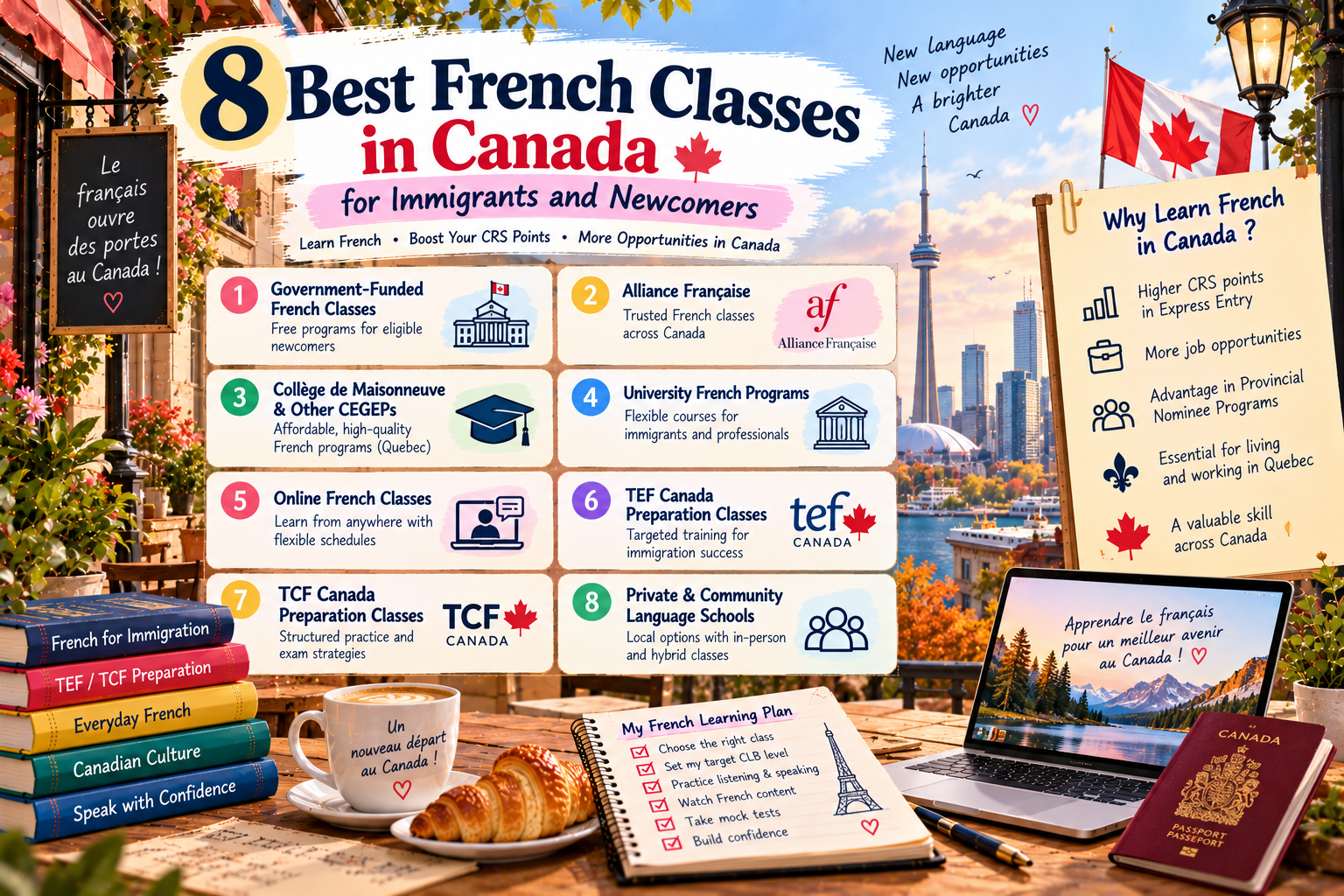
If you plan to settle in Canada, learning French is one of the most strategic decisions you can make. Strong French skills can unlock more immigration pathways, boost your Comprehensive Ranking System (CRS) points, and open doors to bilingual jobs. This guide brings together the best options for French classes in Canada, from free government-funded programs to flexible online French classes and targeted TEF or TCF preparation. You will learn how to match the right French course with your immigration and career goals, what formats exist, and where PrepFrench Classes can help with structured learning and exam readiness. If you prefer to browse courses first, you can start with the PrepFrench Courses page.
Free First Step
Take the guesswork out of learning French.
Not sure where to begin, which course fits your goal, or how long it will take? Book a free demo class with PrepFrench Classes and get a personalized plan built around your level, schedule, and goals.
Why Learning French is Essential for Immigration in Canada
French and Canadian immigration: your key to more options
French proficiency can change your Canadian immigration trajectory. Under Express Entry, IRCC recognizes French test results and awards additional points for strong scores. IRCC also runs category-based selection rounds for candidates with French-language ability, which can make profiles more competitive. For many Provincial Nominee Programs, bilingual candidates gain an advantage for roles that serve the public. In Quebec, French is the everyday language of work and life, and most economic immigration routes expect you to function in French.
These policy realities are not just technicalities. They shape your career too. Bilingual roles are common in federal agencies, customer-facing positions, healthcare support, and international business. The 2021 Census showed that bilingualism is a core part of Canadian life, especially in Quebec and New Brunswick, and is growing in major cities. If you can speak French with confidence, you will have more interview invitations and more internal promotion opportunities.
PrepFrench Classes provides structured pathways that align with immigration needs, including targeted TEF Canada and TCF Canada preparation. If your goal is a specific CLB level for Express Entry or a provincial stream, building a plan around recognized exams is the most efficient route.
Understanding TEF and TCF
Two French exams are commonly used for immigration: TEF Canada and TCF Canada. Both are officially recognized by IRCC and evaluate listening, reading, writing, and speaking. Your scores are converted to CLB levels for immigration. The test formats are different, yet the skill targets are similar: clear comprehension, accurate grammar, controlled vocabulary, and fast task execution.
Here is how to approach them:
- Decide early which test suits you based on test center availability, schedule, and personal preference.
- Map your current level to a target CLB, then set a realistic timeline, for example 3 to 6 months for a jump of one to two CEFR bands with consistent study.
- Use a structured French course that includes mock tests and feedback. Strategy and time management matter as much as grammar.
For official details, review IRCC’s language testing page for Express Entry and category-based selection information on the Government of Canada website. You can also explore PrepFrench’s Full TEF Canada Course and Full TCF Canada Course for tailored training focused on the score you need.
Best Types of French Classes Offered in Canada
Canada offers a wide range of French language classes for newcomers. Your best option depends on your status, location, and timeline. Below is a clear overview to help you compare formats before you commit.
Government-funded programs
These programs provide free or subsidized French language classes for eligible newcomers. They offer placement testing, structured levels, and progress support.
- CLIC (Cours de langue pour les immigrants au Canada): Free French classes for eligible permanent residents and protected persons outside Quebec, delivered through partner organizations.
- Francisation in Quebec: Comprehensive French training for immigrants, often with flexible schedules and, in some cases, financial support for participants.
- Settlement agencies and school boards: Many regions run community-based French language classes for practical communication and workplace readiness.
Government-funded programs are excellent for foundational skills and integration. If you need exam-specific prep on a fixed deadline, you may combine them with focused coaching.
Finding online French classes
Online formats are ideal for working professionals and students. They range from self-paced modules to live small-group or one-to-one lessons with a French teacher.
- Live online classes: Real-time feedback, pronunciation coaching, and targeted practice for TEF or TCF tasks.
- Self-paced courses: Video lessons and exercises for vocabulary, grammar, and listening, with study flexibility.
- Hybrid: Combine live lessons with on-demand drills and mock tests for balanced practice.
PrepFrench Classes offers structured online French lessons designed around your schedule, with dedicated tracks for beginners, daily French, and TEF or TCF scores for Canadian PR. If you need a plan tuned to your level and exam date, a blended approach works well: weekly live classes plus daily micro-practice on reading, listening, and writing.
Private and university options
Many universities and private schools run continuing education programs for adults. Expect professional curricula, clear levels, and set term dates. These classes are strong for consistent progress, academic structure, and peer interaction. If you already work full time, check evening or weekend cohorts. For TEF or TCF, verify that the course includes exam strategies, not just general French.
Structured French Courses
Stop learning French the slow way.
Apps and random videos keep you stuck at beginner level forever. PrepFrench Classes gives you a structured path, a real teacher, and speaking practice that moves you forward at every lesson.
Available for: beginners · TEF/TCF exam prep · Canadian PR · work and daily French
Choosing the Right French Class for Your Goals
Identifying your French level: a quick guide
Use the CEFR scale to estimate your starting point and connect it to immigration needs:
- A1 to A2: Beginner to elementary. You can handle basic phrases and short exchanges. Plan 3 to 6 months to move across this band with 4 to 6 hours weekly.
- B1: Intermediate. You can manage daily situations and simple work conversations. Plan 3 to 6 months to build toward B2 with consistent speaking practice.
- B2: Upper-intermediate. You are ready for more complex discussions and exam targets used for many immigration streams.
- C1 and above: Advanced. Ideal for professional roles that require high-level communication and detailed writing.
A brief diagnostic with a French teacher will give you a clearer map. PrepFrench offers placement and a personalized roadmap during the free demo so you know precisely which French course to choose and how long it might take to reach your goal.
Factors to consider when choosing a class
- Goal clarity: Immigration points, TEF or TCF score, job readiness, or daily life fluency.
- Format: In-person, live online, or hybrid. Choose what you will sustain weekly.
- Schedule: Fixed-term cohorts versus flexible bookings, weekday evenings versus weekends.
- Teacher expertise: Look for experience with TEF or TCF if your target is exam-based.
- Curriculum: Ensure it covers grammar, vocabulary, pronunciation, and real-life tasks, not just passive listening.
- Assessment: Mock tests, speaking feedback, writing corrections, and regular level checkpoints.
- Support: Access to materials, recordings, and catch-up options if you miss a class.
- Budget and value: Free programs are excellent for foundations. For exam timelines, targeted paid coaching can be the difference between CLB 6 and CLB 7.
Most newcomers find success with a blended plan: one live class for guided speaking, plus short daily practice for listening, reading, and drills. If your deadline is close, prioritize a TEF or TCF track that includes timed tasks and feedback on every section.
Overview of the Best French Classes in Canada
Below are eight strong pathways to learn French in Canada. Each option serves a different need, from free integration courses to focused online French lessons that target TEF or TCF results.
| Program Type | Best For | Format | Typical Cost | Typical Duration | TEF/TCF Prep |
|---|---|---|---|---|---|
| Government-funded CLIC | Eligible PRs and protected persons outside Quebec, foundational French | In-person or online via partner organizations | Free for eligible learners | Ongoing levels with placement | Indirect, combine with targeted prep |
| Quebec Francisation | Newcomers in Quebec, integration and work readiness | In-person and online options | Free for eligible learners, support may be available | Multi-level pathways | Indirect, pair with exam coaching if needed |
| University continuing education French | Learners who prefer academic structure and set terms | Evening or weekend cohorts, online or campus | Paid, term-based tuition | 8 to 12 weeks per level on average | Sometimes offered, verify before enrolling |
| Adult school board and settlement classes | Community-based learners seeking practical skills | Local centers or online live groups | Often free or low cost | Varies by region | Usually general French only |
| Private language schools and cultural institutes | Learners who want immersive classes and steady progression | In-person or live online, group or one-to-one | Paid, course-pack based | 6 to 10 weeks per module | Check for exam-focused tracks |
| PrepFrench Classes | Immigration-focused learners aiming for TEF/TCF scores or fast daily French | Live online, small group or one-to-one, with mock tests | Paid, flexible plans | Custom timelines based on target CLB | Full TEF/TCF prep available |
| Online self-paced platforms | Independent learners who want flexible study between live lessons | On-demand videos and quizzes | Low to moderate monthly cost | Self-directed pacing | Limited, pair with live coaching |
| Private online tutoring | Learners who need speaking intensity and personalized correction | One-to-one video sessions with a tutor | Paid per hour or package | Flexible, goal-driven | Excellent for exam speaking preparation |
University continuing education programs
Universities across Canada run adult French courses with clear level pathways, frequent intakes, and credentialed instructors. These are ideal if you value set schedules and peer learning. Before enrolling, confirm whether they include TEF or TCF strategies and mock exams, or if you should add a separate exam prep module.
Local community programs and settlement services
Settlement agencies, school boards, and community centers frequently provide beginner to intermediate French lessons that focus on daily life situations, workplace basics, and integration topics. Many are free or low cost for eligible newcomers. These programs are perfect for building confidence and a routine, especially in your first months in Canada. If you later decide to chase a TEF or TCF score, adding targeted coaching creates a complete plan.
Private language schools and cultural institutes
Private providers often deliver dynamic classes with a strong emphasis on conversation and pronunciation. You will find both in-person options in major cities and live online cohorts for nationwide access. Ask about speaking intensity per class, writing corrections, and any dedicated exam streams if immigration points are your main driver.
Online course platforms
Self-paced platforms help you review grammar, vocabulary, and listening on your own time. They work best as a complement to guided instruction where a teacher corrects your speaking and writing. For faster results, combine a platform with weekly sessions in a structured program such as PrepFrench Classes so you do not plateau at A2 or B1.
If you need exam results, explore the PrepFrench Full TCF Canada Course or Full TEF Canada Course, which include mock tests, feedback, and time management strategies for each section.
Free and Government-Funded French Classes
CLIC: Language courses for immigrants
CLIC provides free French language classes for eligible permanent residents and protected persons outside Quebec. Programs are delivered through local partner organizations and often include placement tests and multi-level pathways.
- Who is eligible: Typically permanent residents and protected persons. Temporary residents are usually not eligible.
- How to apply: Contact a local settlement agency or explore Government of Canada newcomer resources. You will complete a language assessment to determine your class level.
- What to expect: Structured classes focused on daily communication and integration, with progress checks at regular intervals.
CLIC is ideal for building foundations. If you need a specific TEF or TCF score by a deadline, consider supplementing with targeted PrepFrench exam prep so you convert your general skills into tested performance.
Francisation programs in Quebec
Quebec’s francisation system offers robust French courses for newcomers, with in-person and online options and various schedules. Some learners may be eligible for financial support while studying.
- Who is eligible: Immigrants living in Quebec, with details set by the provincial program.
- How to apply: Submit an application through Quebec’s francisation portal, then complete placement and class selection.
- What to expect: Level-based progression, cultural integration, and workplace-oriented modules to help you succeed in Quebec society and job markets.
For TEF Canada or TCF Canada, add focused exam sessions to strengthen task strategy, timing, and high-stakes writing or speaking. PrepFrench Classes can help you combine francisation with a short intensive exam track so you reach your CLB target sooner.
Frequently Asked Questions about French Classes for Immigrants
Which French classes are best for TEF or TCF preparation?
The best French classes for TEF or TCF combine live instruction, mock tests, and targeted feedback for each section, including timed listening and structured writing. Look for a French course that covers grammar and vocabulary but also teaches exam formats, scoring logic, and time management. Many learners succeed with a blended plan: two live online French lessons per week, short daily drills, and a weekly mock section review. PrepFrench Classes offers full TEF Canada and TCF Canada courses designed around CLB targets for immigration.
Are there free French classes for newcomers in Canada?
Yes. Outside Quebec, eligible permanent residents and protected persons can access free CLIC French language classes through partner organizations. In Quebec, francisation programs provide free training, often with multiple schedules and formats. These programs focus on integration and practical communication. If you need a specific TEF or TCF score by a deadline, consider adding targeted online French classes such as PrepFrench’s exam prep to convert general progress into test-ready performance.
What is the typical timeframe to achieve B2 proficiency in French?
Timeframes vary by starting level and study intensity. From strong A2, many learners reach B1 in 3 to 4 months with 6 to 8 hours weekly, then progress to B2 in another 3 to 6 months with consistent speaking, writing correction, and focused listening. If you study 8 to 10 hours weekly with live online French classes and targeted homework, a 6 to 9 month plan from A2 to B2 is realistic. A personalized roadmap from PrepFrench can help you set milestones and adjust pace based on mock test performance.
Should I choose in-person or online French classes for TEF or TCF?
Choose the format you can sustain. In-person classes add community and routine. Online French classes give you schedule flexibility, access to specialized teachers, and easy recording for review. For TEF or TCF, the priority is frequent speaking practice, timed drills, and detailed feedback. Many learners choose online classes for efficient scheduling, then add self-paced practice for vocabulary and listening. PrepFrench Classes deliver live exam strategies plus homework and mock tests, which replicate exam conditions closely.
What factors should I consider when choosing a French class?
Begin with your immigration or career goal, then match the class type to your timeline. Check the teacher’s experience with TEF or TCF if you need exam results. Look for a curriculum that balances grammar, vocabulary, pronunciation, and real tasks. Prioritize programs with regular assessments, mock tests, and feedback on writing and speaking. Confirm schedule flexibility, class size, and support materials. If you are unsure, book a free demo with PrepFrench Classes to receive a placement and a step-by-step plan that fits your level and availability.
PrepFrench Classes
Ready to start French with a clear plan?
Book a FREE demo class and get a personalized roadmap for your level, goal, and timeline. No pressure, no obligation.
Explore courses:
All French Courses · Full TCF Canada Course · Full TEF Canada Course
Final Thoughts
French is more than a subject. It is an accelerator for Canadian immigration and a competitive edge in the job market. You have many ways to learn French in Canada: free CLIC classes, Quebec francisation, university or community options, live online French lessons, and targeted exam prep. The right path depends on your current level, timeline, and whether you need a TEF or TCF score for Express Entry or a provincial stream.
Build a realistic plan. Combine steady classes with short daily practice, then add exam-focused sessions once you approach your target level. If you feel overwhelmed by choices, PrepFrench Classes can map your route in a single conversation and match you to a French course that fits your life.
Explore the PrepFrench Courses page or book a free demo to start with a clear roadmap for success.
✅ Next Step: Book a free demo class with PrepFrench Classes and start learning French the right way.
Tip: Implement FAQ schema for the questions above to help this guide appear in rich results. Keep exploring the full range of French classes in Canada to build a language plan that supports both immigration and long-term career growth.
Written by
Platform Administrator
Practical ideas from the Prep French team for learners building confidence, preparing for exams, and planning their next step in Canada.
Join the discussion
Leave a thoughtful comment.
Your email address will not be published. Comments are reviewed before appearing.