Types of French Cheese: A Guide to Styles and Flavours
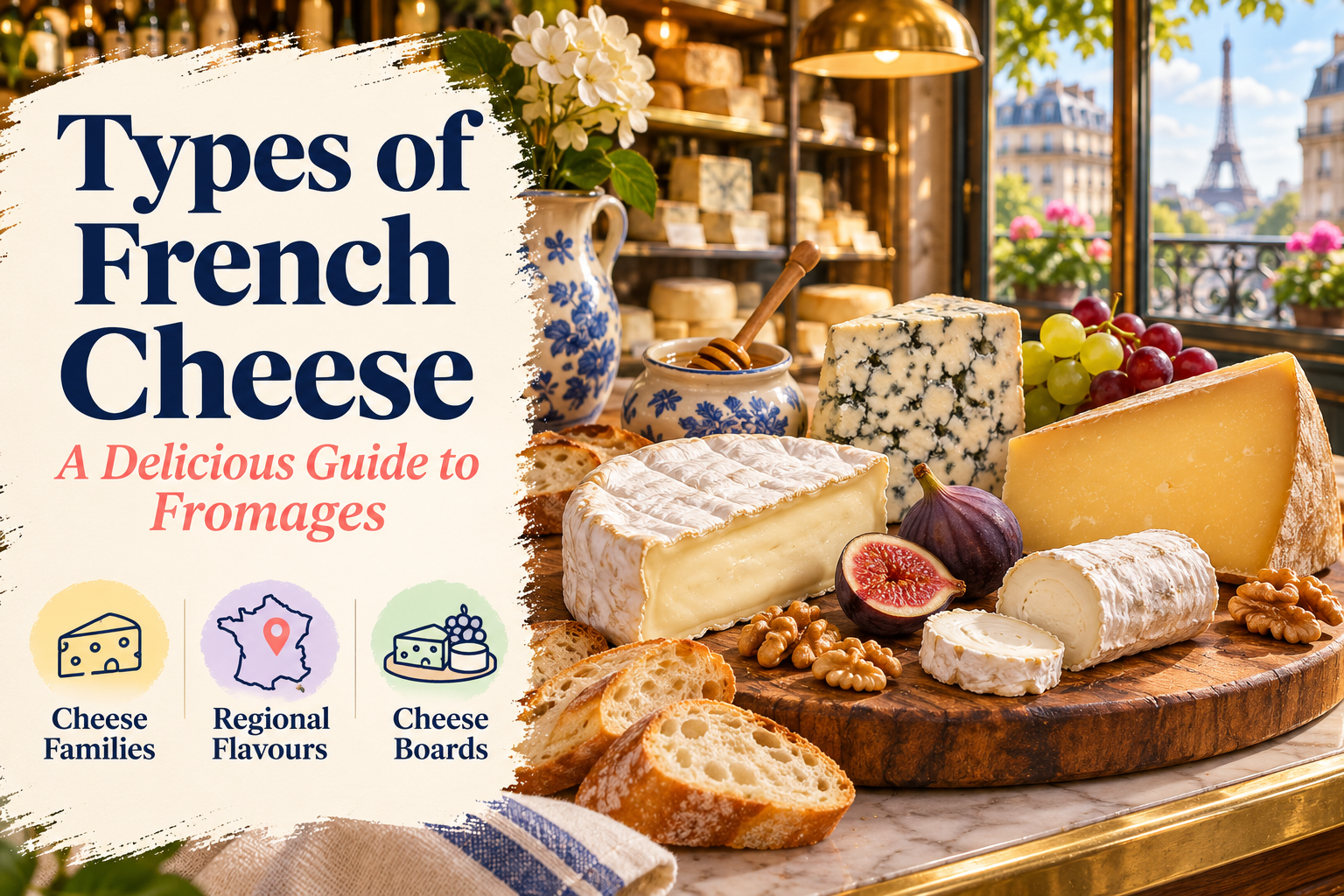
French cheese is a world of flavor, tradition, and storytelling. This French cheese guide explores the main types of French cheese, how AOP and PDO labels protect authenticity, and how to build a beautiful cheese board. You will also learn simple pronunciation tips for well-known French cheese names and how regional styles shape taste. If you study with PrepFrench Classes, food culture becomes a powerful way to learn French vocabulary, pronunciation, and confidence in real conversations. Start here, then use your curiosity in your next French lesson to ask questions, practice small talk, and refine your accent.
- Why France has so many styles: goat, cow, and sheep milks, plus unique terroirs.
- AOP and PDO: labels that protect origin and methods so you know what you are buying.
- Family types you will meet: soft bloomy rind, washed-rind, blue, pressed, and goat or sheep cheeses.
- Pronunciation quick guide: Brie [bree], Camembert [kah-mahn-bair], Roquefort [rock-for], Comté [kohn-tay], Chèvre [shev-ruh], Reblochon [ruh-bloh-shohn].
- Regional icons: Normandy, Auvergne, Jura, Savoie, Burgundy, and the Loire Valley each have signature styles.
- Practical tips: buying, storing, pairing, and building a balanced cheese board.
If you want to connect language with culture, browse the PrepFrench home page or explore our French courses. Food vocabulary is a friendly way to practice daily French.
Free First Step
Take the guesswork out of learning French.
Not sure where to begin, which course fits your goal, or how long it will take? Book a free demo class with PrepFrench Classes and get a personalized plan built around your level, schedule, and goals.
The Importance of French Cheese
French cheese is not just something to eat. It is culinary heritage, daily ritual, and a source of regional pride. From rustic mountain tommes to delicate Loire Valley goat cheeses, every wheel tells a story of landscape and people. For learners who want to speak French confidently, knowing these stories unlocks rich vocabulary and cultural context that make conversations feel natural.
Historical Significance of Cheese in France
Cheese making in France dates back to Roman times and grew through monasteries and rural communities. Over centuries, techniques adapted to local climates and pastures. This is why a soft buttery Brie from Île-de-France tastes so different from a nutty Comté from the Jura mountains. Today, dozens of cheese fairs celebrate this heritage, and AOP designations help preserve traditional methods for future generations.
Cultural Practices: Fromages in Daily Life
In many French homes, cheese follows the main course and comes before dessert. Restaurants often offer a plateau de fromages that highlights local specialties. Visiting a fromagerie to ask for seasonal picks is a small ritual of everyday culture. If you are learning French, this is perfect territory to practice polite questions, numbers, and adjectives for taste and texture. You can start with a quick visit to the PrepFrench site to see how our teachers weave culture into lessons.
- Culinary significance: a backbone of regional cuisine and hospitality.
- Heritage: centuries of craft, protected by AOP and PDO labels.
- Social role: a moment of sharing in homes and restaurants.
- Language learning: a fun way to expand French vocabulary and pronunciation.
Understanding the Family Types of French Cheese
When people search for types of French cheese, they usually mean the classic families you will see on a cheese board. Each family has clear traits, from the white bloomy rind of Brie to the autumnal orange wash of Époisses. Below is a quick tour to help you recognize flavor profiles and pick great pairings. Use this as a living French cheeses list, then taste to build your own memory map.
Soft Cheeses (Bloomy Rind)
These cheeses ripen from the outside in and wear a white, velvety rind. Inside, the paste is creamy, sometimes oozing at room temperature.
- Brie de Meaux AOP: buttery, mushroomy, elegant. Region: Île-de-France.
- Brie de Melun AOP: more robust, salt-forward, deeper mushroom notes.
- Camembert de Normandie AOP: lactic, earthy, with a gentle barnyard complexity.
- Neufchâtel AOP: often heart-shaped, tangy and sweet-cream notes, from Normandy.
Serve slightly chilled then let warm to room temperature for a luscious texture. Pair with crusty baguette and a crisp cider or sparkling water with lemon.
Washed-Rind Cheeses
These cheeses are rubbed or washed with brine or alcohol as they mature. The rind turns orange to amber and can smell strong, yet many taste surprisingly mild and meaty.
- Époisses AOP (Burgundy): washed in Marc de Bourgogne, rich and savory.
- Maroilles AOP (Hauts-de-France): pungent aroma, smooth and buttery core.
- Munster AOP (Alsace-Lorraine): aromatic rind, sweet and milky interior.
- Reblochon AOP (Savoie): nutty, creamy, famous for tartiflette.
Try with roasted potatoes or dark bread. Non-alcoholic pairing idea: lightly sweet iced tea or pear juice to balance the savory depth.
Blue Cheeses
Blue mold veining brings a salty, tangy kick and a cool creaminess. They vary in intensity, so start mild and build up.
- Roquefort AOP (sheep, Aveyron): benchmark blue, bold and complex, aged in limestone caves.
- Fourme d’Ambert AOP (Auvergne): gentler, creamy, subtly fruity.
- Bleu d’Auvergne AOP: robust and rustic, with a peppery edge.
Balance salt with honey, ripe pears, or walnuts. A zero-alcohol pairing: cold grape juice or a malted soda.
Pressed Cheeses
Pressed cheeses include cooked and uncooked styles. Many are firm to slice, with flavors that range from milky to roasted nut and brown butter.
- Comté AOP (Jura): cooked and pressed, notes of hazelnut, caramel, and alpine herbs.
- Beaufort AOP (Savoie): elegant alpine cheese with a long, savory finish.
- Cantal AOP (Auvergne): firm and tangy, a great sandwich cheese.
- Ossau-Iraty AOP (sheep, Basque-Béarn): buttery and floral, lovely with cherry jam.
Perfect for snacking, sandwiches, and gratins. For a light pairing, choose sparkling water and apple slices.
Goat and Sheep Cheeses
Goat cheese, often called chèvre, shines in the Loire Valley and beyond. Sheep cheeses appear in the southwest and mountains. Flavors are clean, bright, and grassy, then deepen with age.
- Crottin de Chavignol AOP (Loire): fresh and tangy when young, nutty and firm when aged.
- Sainte-Maure de Touraine AOP: log-shaped with ash rind, delicate and slightly citrusy.
- Pouligny-Saint-Pierre AOP: pyramid shape, fine and herbaceous.
- Ossau-Iraty AOP (sheep): sweet butter and hay aromas, a crowd-pleaser.
Chèvre loves honey, figs, and salads. Learn vocabulary for textures in our online French classes so you can describe exactly what you like at a fromagerie.
Structured French Courses
Stop learning French the slow way.
Apps and random videos keep you stuck at beginner level forever. PrepFrench Classes gives you a structured path, a real teacher, and speaking practice that moves you forward at every lesson.
Available for: beginners · TEF/TCF exam prep · Canadian PR · work and daily French
What Do AOP and PDO Mean?
AOP (Appellation d’Origine Protégée) and PDO (Protected Designation of Origin) are European quality labels. They guarantee that a cheese is made within a defined region using recognized methods and ingredients. For buyers, the benefit is clear: authenticity and traceability. When a label reads Roquefort AOP, you can trust the milk source, caves, and techniques that create that iconic flavor.
The Meaning of AOP/PDO
Both labels protect traditional know-how. AOP is the French version within the EU framework, while PDO is the broader European term used in English. These labels control milk origin, production steps, and maturing conditions. For students who learn French, understanding these words helps with food labels, menus, and market conversations. It also supports smart buying choices online and while traveling.
How to Identify Authentic French Cheese
Look on the packaging or rind for AOP or PDO logos and the full protected name. If the name is slightly altered, it may be an imitation rather than a certified product. Here are notable AOP cheeses to watch for:
- Brie de Meaux AOP, Brie de Melun AOP
- Camembert de Normandie AOP, Neufchâtel AOP
- Roquefort AOP, Bleu d’Auvergne AOP, Fourme d’Ambert AOP
- Comté AOP, Beaufort AOP, Cantal AOP
- Ossau-Iraty AOP, Reblochon AOP, Munster AOP, Époisses AOP
- Crottin de Chavignol AOP, Sainte-Maure de Touraine AOP, Pouligny-Saint-Pierre AOP
Want to practice pronunciation and label-reading in a real conversation? Book a free demo with PrepFrench Classes and ask your teacher to build a short food-shopping role play.
Cheese Board Essentials
A well-balanced French cheese board is a mini tour of regions and textures. It should offer contrast, flow, and thoughtful accompaniments. Here is a simple method that works for most occasions.
Choosing Your Cheeses
- Pick 3 to 5 cheeses: one bloomy rind, one washed-rind or blue, and one pressed. Add a goat or sheep cheese for variety.
- Balance intensity: include both mild and strong styles so guests can explore comfortably.
- Vary milk types: cow, goat, and sheep bring different textures and aromas.
- Plan portions: 60 to 90 grams per person if cheese is part of a larger meal, a bit more if cheese is the main event.
- Arrange the tasting order: go from mild to strong so delicate flavors are not overshadowed.
Sample line-up: Brie de Meaux AOP, Sainte-Maure de Touraine AOP, Comté AOP, and Roquefort AOP. This covers creamy, tangy, nutty, and blue. For non-alcoholic drinks, try sparkling water with citrus, kombucha, or a lightly sweet apple must.
Accompaniments: Bread, Fruits, and More
Accompaniments highlight, not hide, the cheese. Keep it simple and seasonal.
- Bread and crackers: fresh baguette, rustic sourdough, or plain water crackers.
- Fresh fruit: grapes, pears, figs, apples, or ripe stone fruit. Avoid very acidic citrus with delicate cheeses.
- Dried fruit and nuts: apricots, dates, walnuts, almonds, or hazelnuts.
- Condiments: cherry jam with Ossau-Iraty, honey with chèvre, quince paste with blues or pressed cheeses.
- Pickles: cornichons help cleanse the palate with washed-rind cheeses.
Serving tips: take cheeses out of the fridge 45 to 60 minutes before eating. Provide a separate knife for each cheese to avoid mixing rinds and aromas. If you want to talk about your board in French, ask your teacher in our French course to help you practice descriptive adjectives and polite invitations.
Buying and Storage Best Practices
Great cheese starts with smart buying and gentle storage. Whether you are at a market in France or ordering online, a little care preserves flavor and texture.
How to Buy Cheese in France (or Online)
- Look for AOP/PDO names: they signal protected methods and origin.
- Ask for the ripeness you prefer: say moelleux for soft and runny, or plus ferme for firmer texture.
- Check the cut surface: it should look fresh, not cracked or oily.
- Raw vs pasteurized: raw milk (lait cru) can offer deeper complexity. If pregnant or immunocompromised, choose pasteurized options and consult guidelines.
- Order timing for delivery: avoid long transit in hot weather. Request insulated packaging when possible.
Storing Cheese Properly
- Wrap thoughtfully: use wax paper or cheese paper, then a loose layer of plastic or a reusable container. Avoid tight plastic wrap against the paste.
- Temperature: most cheeses are happy around 4 to 7 degrees Celsius in the fridge, vegetable drawer preferred.
- Separation: store strong washed-rind cheeses separately to prevent aroma transfer.
- Short shelf life for soft cheeses: enjoy within a few days of purchase at peak ripeness.
- Refresh rinds: if a bloomy rind dries a little, rewrap in breathable paper for a day to restore balance.
Practice shopping phrases and storage discussions in our French language classes so you can handle real-life conversations at a market or fromagerie with ease.
Clearing Up Confusion
French cheese terms can be tricky. Here are clarifications that help you make confident choices and speak about cheese accurately in French.
Myth-Busting Common Cheese Confusions
Brie and Camembert look similar, yet they are not identical. A table comparison helps you spot the difference quickly.
| Characteristic | Brie de Meaux AOP | Camembert de Normandie AOP | Generic Brie/Camembert |
|---|---|---|---|
| Size & Shape | Large wheel, often cut into wedges | Small individual wheel | Varies widely |
| Texture | Creamy, sometimes oozing at the edge | Soft and lactic, slightly firmer center | Often consistent, less nuanced |
| Flavor Profile | Buttery, mushroomy, elegant depth | Earthy and lactic with subtle barnyard notes | Milder, sometimes one-dimensional |
| Label | AOP indicates protected origin | AOP indicates protected origin | May lack AOP/PDO label |
If the label only says Brie or Camembert without the protected name, it can still taste good, but it will not be the certified AOP style. In conversation, use the full protected name to be precise: Camembert de Normandie AOP, not just Camembert.
Understanding Labels and Names
- AOP vs generic names: AOP cheeses follow strict rules. Generic versions can vary in milk source and technique.
- “à la” on labels: signals imitation in the style of a place, not the real deal.
- Milk terms: lait cru (raw), pasteurisé (pasteurized), thermisé (thermized). Each affects flavor and safety guidelines.
- Aging terms: jeune (young), affiné (aged), vieux (old). These influence texture and intensity.
Discuss these nuances in class and you will gain practical confidence quickly. Book a free demo with PrepFrench to get a personalized learning plan that includes culture-focused speaking practice.
PrepFrench Classes
Ready to start French with a clear plan?
Book a FREE demo class and get a personalized roadmap for your level, goal, and timeline. No pressure, no obligation.
Explore courses:
All French Courses · Full TCF Canada Course · Full TEF Canada Course
FAQ: Your French Cheese Questions Answered
How are French cheeses classified?
French cheeses are commonly grouped by family type: soft bloomy rind, washed-rind, blue, pressed (cooked or uncooked), and goat or sheep cheeses. You will also see labels for milk type and aging level. In our online French classes, we teach simple phrases to describe texture and taste so you can ask for exactly what you want. Understanding these families helps you build balanced cheese boards, read menus, and shop with confidence while you learn French vocabulary that you can use in everyday life.
What does AOP/PDO mean, and how does it affect cheese quality?
AOP (Appellation d’Origine Protégée) and PDO (Protected Designation of Origin) guarantee that a cheese comes from a defined region and follows protected methods. This preserves authenticity and typical flavor. For example, Roquefort AOP must be aged in specific caves. While non-AOP cheeses can taste good, AOP labels help you buy with confidence. If you want to discuss labels in French, PrepFrench Classes can include market role plays and pronunciation practice in your French course.
What are some of the best French cheeses for a cheese board?
Choose a mix of textures and milk types. A classic lineup: Brie de Meaux AOP or Camembert de Normandie AOP for a bloomy rind, Comté AOP for a nutty pressed cheese, Sainte-Maure de Touraine AOP for a tangy goat, and Roquefort AOP or Fourme d’Ambert AOP for blue. Add fresh baguette, fruit, and a little honey. If you are learning French, ask your teacher for tasting vocabulary during your French lessons so you can describe aromas and textures naturally.
How do I store soft versus hard cheeses?
Wrap soft cheeses in breathable paper, then place loosely in a container. Keep them in the vegetable drawer around 4 to 7 degrees Celsius, and eat within a few days at peak ripeness. Hard or pressed cheeses also prefer breathable paper and can last longer, often one to three weeks once cut. Store strong washed-rind cheeses separately to prevent aroma transfer. In your French course, you can learn the exact French phrases to ask for storage advice at a fromagerie.
Are there vegetarian-friendly French cheeses?
Yes, but you need to check the rennet. Traditional French cheeses often use animal rennet, yet some producers offer versions with microbial or vegetable rennet. Labels may indicate présure microbienne or présure végétale. If you buy online, filter by vegetarian options or ask the seller directly. Learning these terms in French will help you shop confidently. PrepFrench Classes can add a short vocabulary module on labels and dietary preferences to your online French classes.
Final Thoughts
French cheese is a delicious map of regions, traditions, and techniques. Once you recognize the main types of French cheese, AOP and PDO labels, and a few classic names, you can walk into any cheese shop with confidence. Build boards that balance texture and flavor, pair thoughtfully with fresh bread and fruit, and store your wedges with care so they shine at the table. As you practice, talk about what you taste in French. That simple habit turns a snack into real fluency training.
PrepFrench Classes blends culture with language so your French lessons feel practical, memorable, and social. From learning how to ask for fromage affiné to discussing your favorite regional specialties, we turn curiosity into conversation. If you are ready to learn French with a structured path and a friendly teacher, we would be happy to help.
✅ Next Step: Book a free demo class with PrepFrench Classes and start learning French the right way.
Explore more about French culture through our courses.
Written by
Platform Administrator
Practical ideas from the Prep French team for learners building confidence, preparing for exams, and planning their next step in Canada.
Join the discussion
Leave a thoughtful comment.
Your email address will not be published. Comments are reviewed before appearing.